Avoid Uganda

The rot is advanced beyond any imagination and permeates all institutions and people

Contact: dilhes@outlook.com

Case 1: Sandrah Namata, Okoth David Okango, Sgt. Beatrice Gonza and Advocate Mugabi — UPF IGP Impersonation, stolen apartment goods, a fake “domestic abuse” case, Ugandan Police bribing, complete corruption of Police process.
This case is about a Ugandan woman named Sandrah Namata who emptied an apartment that a European expat had rented for the two of them. He was supposed to be her boyfriend. They never lived together. He discovered she was a gold digger and ended the relationship before he arrived in Uganda. She took the contents of the house and left. Among the stolen items was a computer meant for work.

When the expat pressed her for the return of his belongings, two things happened.

First, Sandrah went to policewoman Sgt. Beatrice Gonza of the police station on Kira Road (Sgt. Beatrice Gonza was Sandrah’s friend). Together they filed a fake “domestic abuse” report — even though the expat and Sandrah had not seen each other in many months and had never cohabited.

Second, the expat asked for help and mediation (not for free) from a man who presented himself as a lieutenant of the UPDAF (Uganda People’s Defence Air Force) and a pilot — and, most impressively, as the son of the then Inspector General of the Uganda Police Force, Martin Okoth Ochola. His real name is OKOTH DAVID OKANGO.

What follows are recorded phone conversations between the fake Ochola son, Sgt. Beatrice Gonza, Chairman Kulambiro of Kisaasi, and a man named Mugabi who was presented as a lawyer representing or helping Sandrah.

Warning to Expats & Tourists

If you are in Uganda, assume the woman you are with is most likely a gold digger. If you do not play the way she wants, she can try to have you arrested with a fake “domestic abuse” filing. You do not want to be arrested by Ugandan police.

People in this case

Sandrah Namata, Uganda — subject of the stolen-apartment and fake domestic-abuse case
Sandrah Namata
Mugabi, presented as a lawyer helping Sandrah Namata
Mugabi — presented as lawyer for Sandrah

Audio recordings

File Player Caption / Notes
1.mp4
First call between fake Ochola son and Sgt. Beatrice Gonza of the Ugandan Police on Kira Road
2.m4a
Sgt. Beatrice Gonza will do anything for the republic as long as there is an "appreciation"...
3.m4a
The rot continues...
4.m4a
OMG - more to come!

Other images

File Preview Caption / Notes
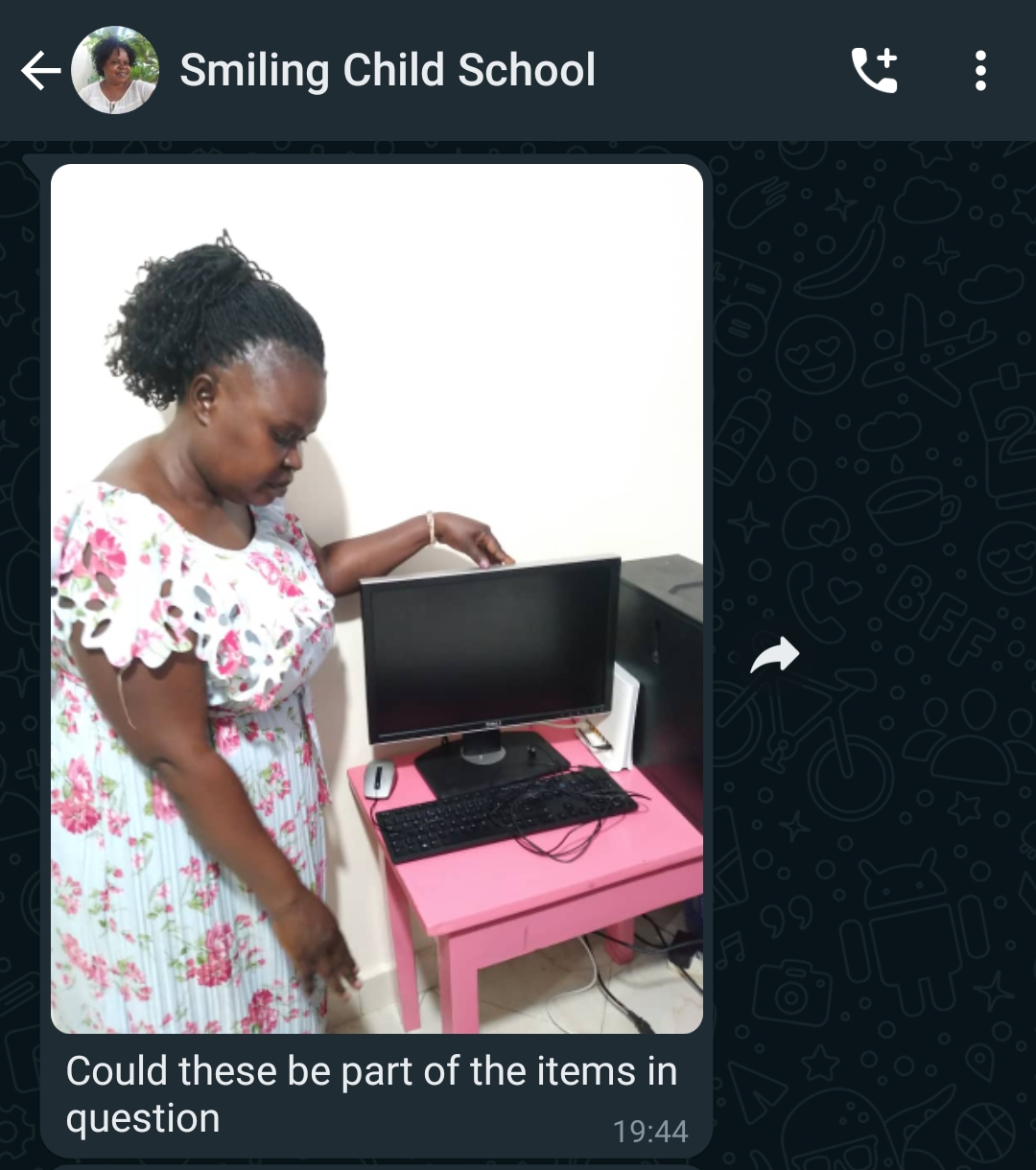
Beatrice.png Sgt. Beatrice Gonza of Kira Road police standing next to a stolen computer
Sgt. Beatrice Gonza standing next to stolen computer — apparently endorsing it all.
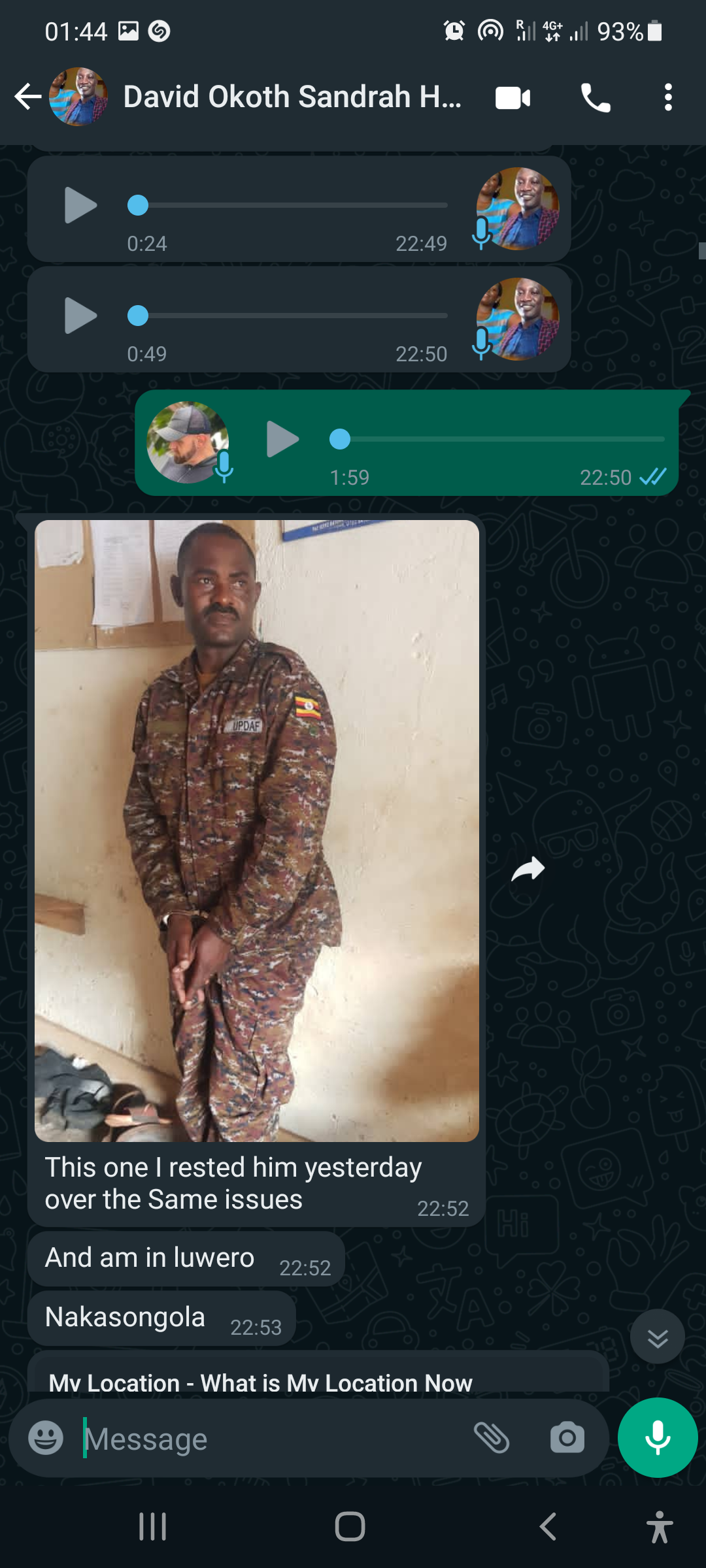
jailed.png Photo shown by the man claiming to be Ochola's son, an Air Force officer
Fake Ochola's son is some kind of Air-Force officer who showed me this to impress me

Video evidence

Scammer Ugandan Air Force officer pilot in the cockpit.

Mayi Nalubega (aka “Maya”) — Serial Scammer & Gold Digger, aided by a population of “Professionals” and “Officials”, that are ready to do anything for some money.

Based on a statement to Uganda Police dated 8 June 2022. The complainant’s name is withheld here.

Warning to UK Citizens

Attention: she has now moved permanently to London and is certainly already in the business of scamming UK citizens.

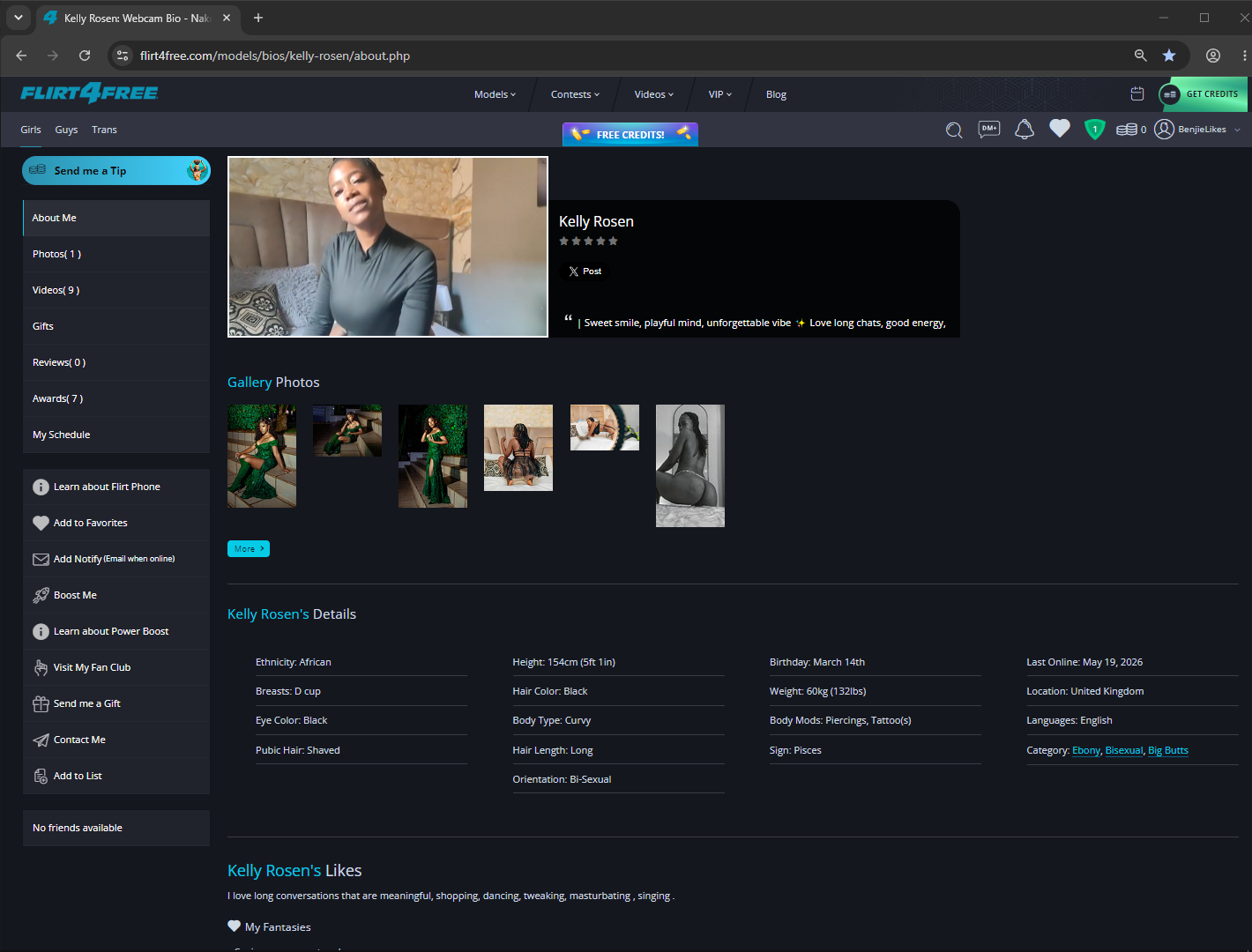
Webcam profile page for Kelly Rosen, location listed as the United Kingdom

An EU citizen arrived in Uganda for the first time on 9 November 2020 to meet Mayi Nalubega (“Maya”), whom he had met on the webcam site imlive.com. Webcam work of that kind is legal in most countries outside Uganda.

At that time Maya was working at a studio later shut down by Kampala police. Her boss was Olivia (real name: Oliver Nakaziba), later arrested by Ugandan Police with other models. On 6 June 2022, Territorial Police in Kabalagala publicly reported the bust of an online sex hub run from a rented apartment under the cover name “Online Module Center.” Arrested with Olivia were Wainawalo Ester (18), Matovu Patricia (18), Katusiime Mackline (20) and Atim Rital (25).

When the complainant arrived, Maya had started her own studio. He helped her, believing it was a legitimate business. After the complainant found that it was not a legal business in that particular country, and after the relationship had already collapsed, he decided to close the apartment he had rented, sell the contents and leave the country.

While he was away for a temporary business trip, Maya returned to that apartment with family members and a policeman she knew. They entered illegally and took all the contents of the apartment (leased under his name) that were purchased and belonged to him. The landlord in Makindye, named Bryan, can confirm that account (his phone number is available on request).

Maya then reopened her own studio at another location using the stolen goods. That studio was also closed by the complainant, upon his return, with help from friends and police. Facing the loss of the studio again, Maya tried to convince him she had been left pregnant by him without telling him, and sent photographs of an apparent pregnancy.

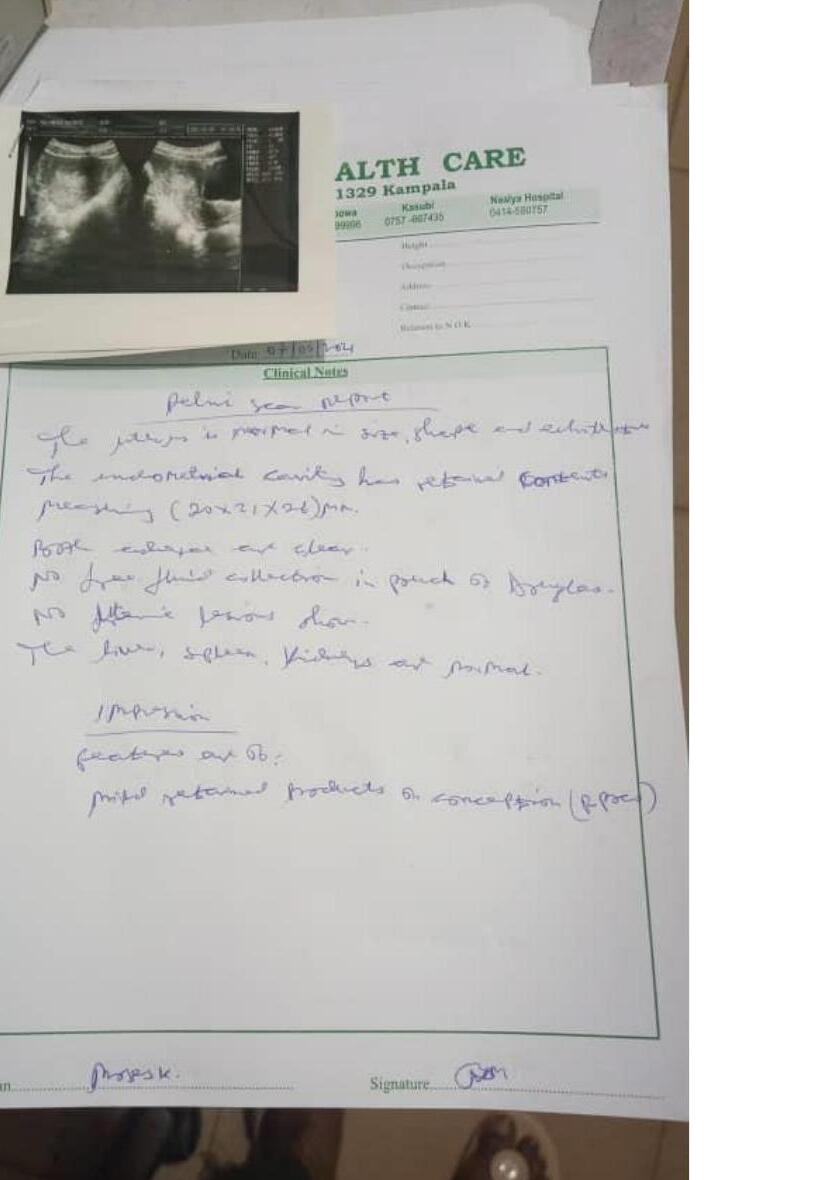
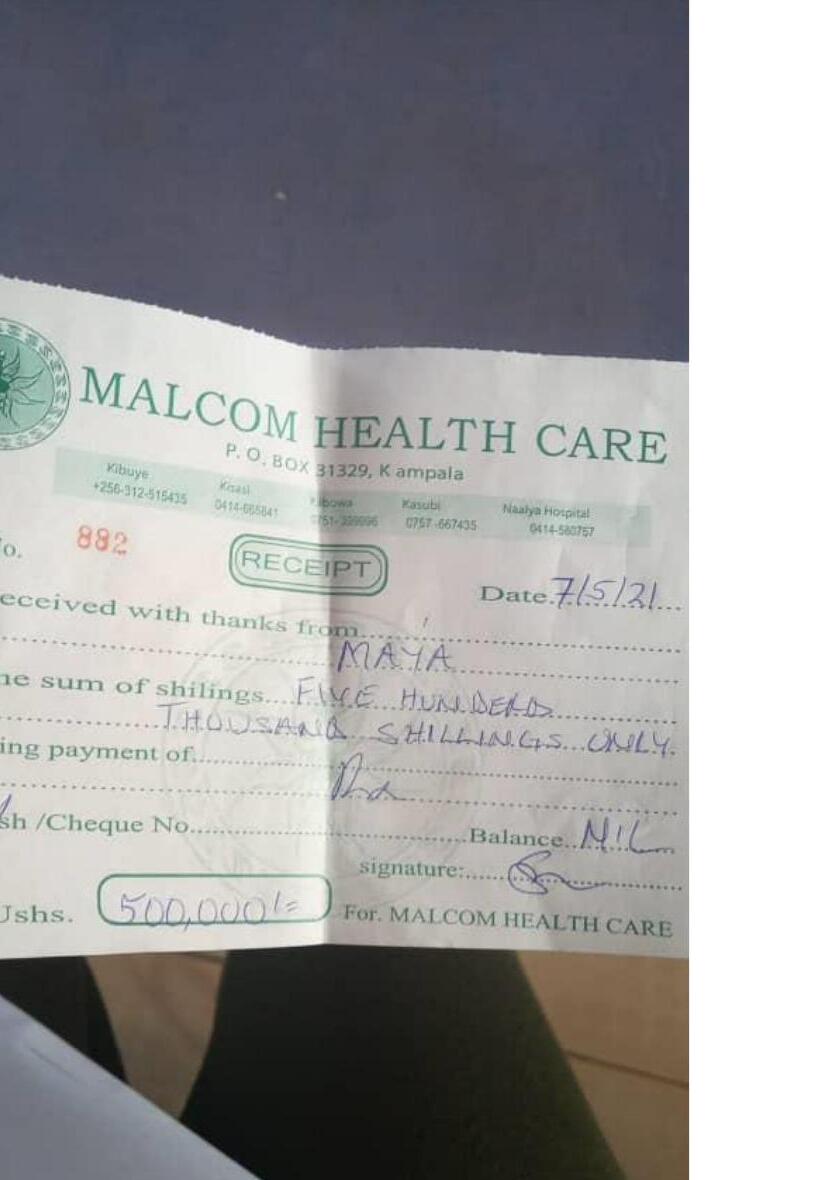
He was not convinced. She then said her mother had died and that she had to abort twins. He sent her to a clinic of his choice, which produced a report that testified that an abortion had indeed taken place. He later concluded she had paid the clinic for a fabricated report. A handwritten clinical note from Alth Care / Malcom Health Care (Kampala) and a receipt dated 7 May 2021 for UGX 500,000 in the name “MAYA” were part of that paper trail and are attached here.

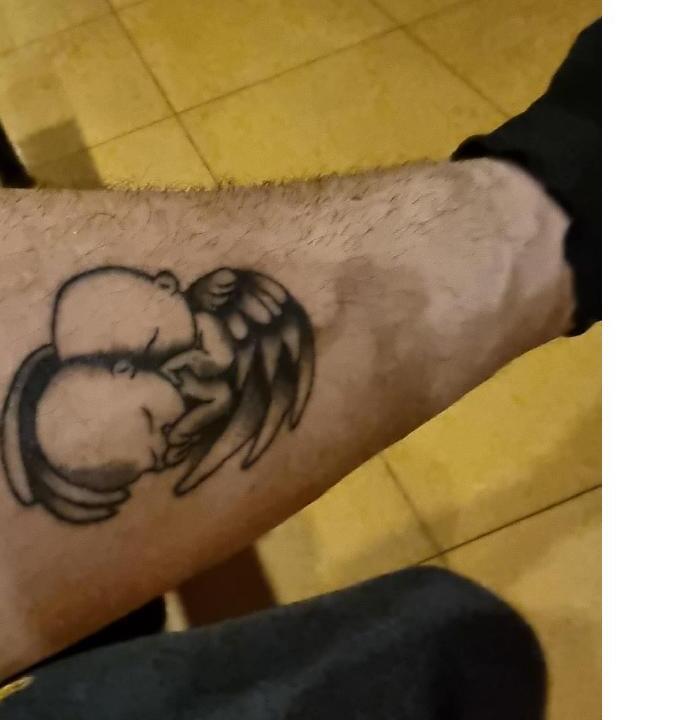
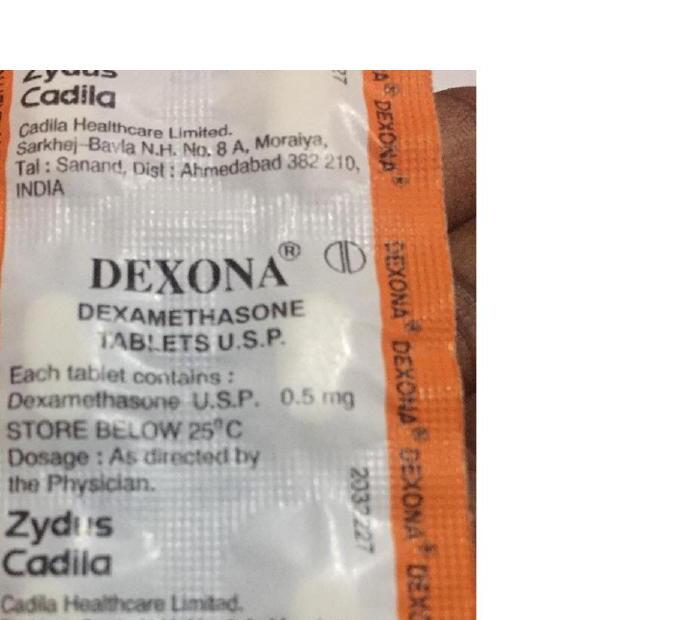
The EU expat believed the story, had a tattoo made of his “lost twins,” and returned to Uganda to find her. On arrival he found fattening pills at Maya’s apartment (Dexona/dexamethasone) and discovered that her mother was alive and had been hidden so she could pretend to be dead. The pregnancy, abortion and death story were fabricated to pull him back and keep the studio running.

They broke up at the same apartment she occupied for some more months after he left — once more an apartment whose lease was under his name. He later found she was still running the same work from that apartment and employing other girls too to do the same.

Mayi Nalubega is a con-woman who has burned and extorted many men. She is one of the thousands of Ugandan women who survive doing cons like that or worse.

Warning to Expats & Tourists

This scam follows a typical pattern employed by Ugandan gold diggers. Meet online. Extract money and housing. When the victim leaves, empty the apartment with help from family and perhaps a friendly or paid policeman.

If things toughen up, invent pregnancy, abortion and dead relatives to muddy the waters and gaslight, in order to keep achieving the goal of extortion. Provide seemingly credible proof from “professionals” or “officials” who will provide anything from fake medical reports to death certificates, birth certificates and even fake IDs — with the significant detail being that these are not counterfeit documents, but official documents made to order (for a negotiable fee) by Uganda’s official authorities or seemingly respectable large businesses.

Evidence from the police statement

Copy these files into the site root next to index.html if they are not already there.

File Preview Caption / Notes
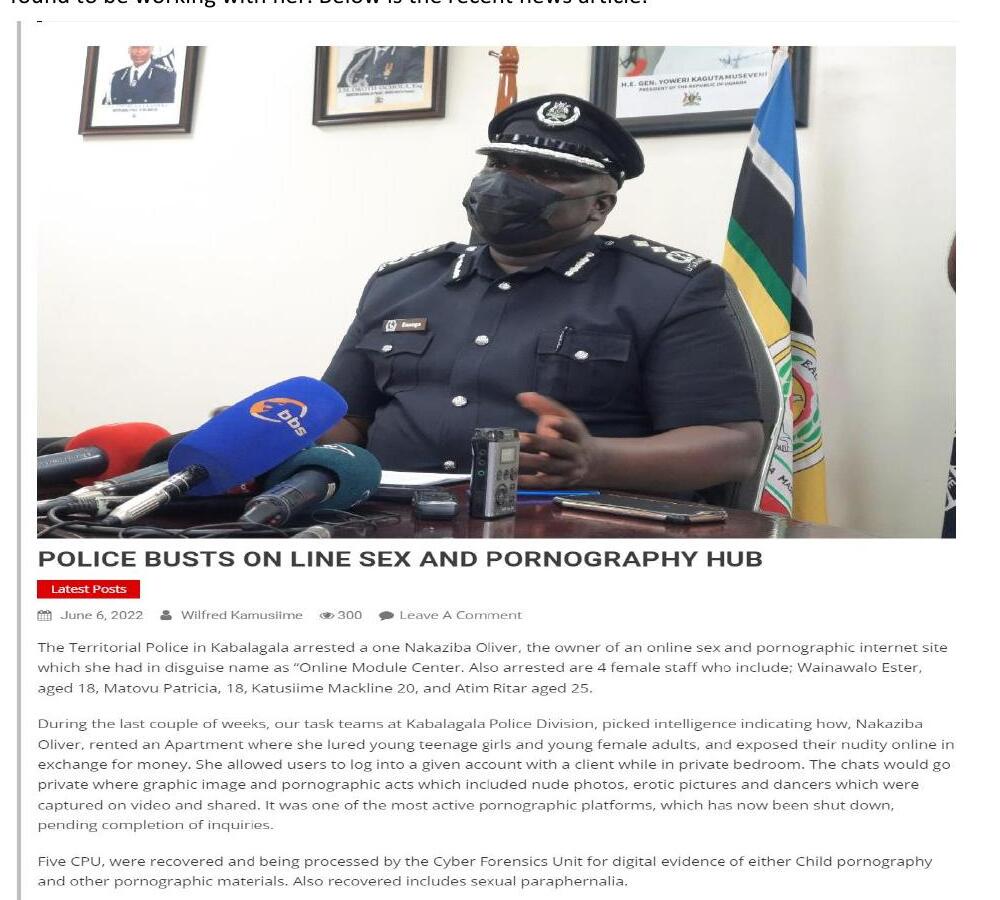
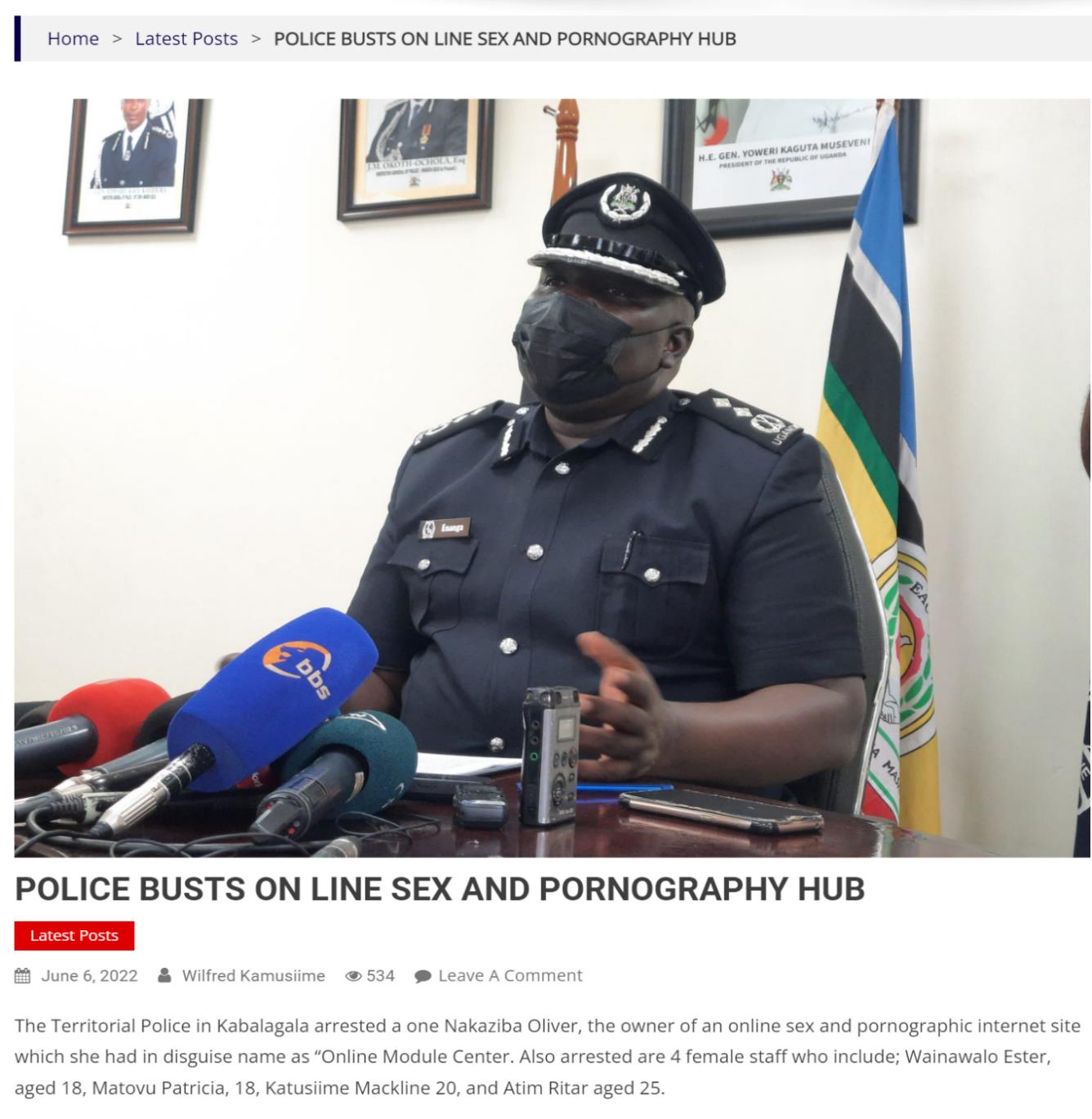
maya-police-bust.jpg June 2022 news report: Kampala police bust of an online sex hub in Kabalagala linked to Nakaziba Oliver (Olivia)
6 June 2022 news: Kabalagala police bust of Olivia’s studio — the workplace Maya came from.
maya-pregnancy.jpg Photo Mayi Nalubega sent claiming she was pregnant
Photo Maya sent claiming pregnancy after the first studio was closed.
maya-clinic-note.jpg Handwritten clinic note from Alth Care / Malcom Health Care Kampala used as proof of an abortion
Clinic note she produced. The statement says she paid for a fake report.
maya-clinic-receipt.jpg Malcom Health Care receipt dated 7 May 2021 for 500,000 shillings in the name MAYA
Receipt 7 May 2021 — UGX 500,000, name MAYA, Malcom Health Care, Kampala.
maya-twins-tattoo.jpg Tattoo of twin infants made after Maya claimed she had aborted twins
Tattoo made after he believed the twins story and returned to Uganda.
maya-dexona.jpg Dexona dexamethasone tablets found after return to Uganda
Fattening pills found on return — Dexona (dexamethasone).
maya-bedroom.jpg Photo sent during the pregnancy claim, partially covered
One of the photos sent with the pregnancy story. Exposed area covered.
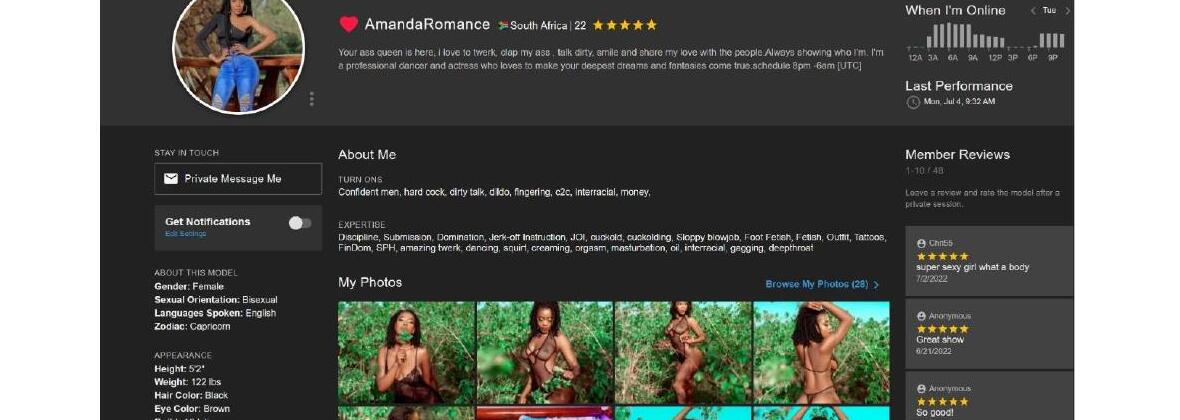
maya-cam-profile.jpg Webcam profile AmandaRomance used after the breakup
Cam profile (AmandaRomance) showing the same work continuing after the breakup.
maya-cam-photo.jpg Photo from the same cam profile, chest covered
Photo from that profile. Exposed area covered.

Underage Ugandans obtain OFFICIAL adult age IDs by bribing in order to work online as sex cam girls

We have received an email from a sex cams site that is currently exploiting minors in Uganda (and probably elsewhere). They referenced the addition to their site of AgeGo, as a way to deal with the problem of Ugandan minors with official Ugandan IDs that bear inaccurate birth dates. This is another trick to keep doing what they have been doing all along, while making an implication to a false claim. Simply put: ‘facial age estimation systems of the type used by AgeGo cannot be relied upon to correctly distinguish 16-year-olds from 18-year-olds in this population’, as the following 2 page analysis we put together, based on the latest scientific research and data at NIST, shows quite unequivocally. To the sex cam sites still onboarding Ugandan models: Stop the tricks and respect the fact that your practices destroy lives daily in that country (that we have first hand knowledge of), but, we are sure, in other countries as well. Click on the link below to find out the scientifically proven reasons why systems like AgeGo cannot reliably tell apart 16, 17 and 18 year old East African females.

AgeGo and other AI based age-verification systems cannot tell if an East African female is 16, 17 or 18.

There are almost certainly underage Ugandan workers on sex cam sites, because there is very strong evidence of extreme corruption in Uganda’s official authority of ID issuance (NIRA), whereby bribing can change date of birth, and pretty much everything else — something that I witnessed myself a couple of years ago while in Uganda.

Right below you will find links to articles about exactly that, written by Ugandan reporters, and involving even a request that the government provide an “age verification machine”, because official IDs cannot reliably establish the age of a Ugandan citizen, even within Uganda.

Why an adult ID is not proof of age

If a national ID can be issued, or its date of birth altered, for a fee, then a cam site that accepts that ID as age proof is not checking age. It is checking a document Ugandan reporters have already described as for sale.

Warning to Expats & Tourists

If you are in Uganda, you may have sex with a girl who is underage even though she holds an apparently valid and official adult-age ID. You can later be jailed in Uganda as a pedophile, or extorted of a lot of money by the police in order to be let go. An official-looking adult ID is not a defence.

Ugandan reporting

Screenshots of those reports

Click an image to open it full screen.

Sunday Vision, 5 May 2019. Headline: “Forgery, bribery hit ID project.” Also: “NIRA officials ask applicants to pay for documents” and “Ugandan citizenship on sale, NIRA officials on the spot.”
Daily Monitor, 29 April 2022. NIRA said some Ugandans apply to lower or increase their age on National Identity Cards.
The Observer, 11 March 2026. Government Analytical Laboratories asked Parliament for at least Shs 2 billion for age-detection equipment after NIRA referrals.
Same article: NIRA referrals during ID renewal, and the writer’s claim that altering age has long been a norm.
Same article: driving permits, birth certificates, passports and national IDs described as carrying imaginary ages.

AgeGo and other AI based age-verification systems simply cannot reliably tell if an East African female is 16, 17 or 18.

Limitations of Facial Age Estimation for East African Adolescents

Why Facial Age Estimation Systems Cannot Reliably Distinguish 16- from 18-Year-Old East Africans

An Evidence-Based Assessment Drawing on NIST Evaluations and Identity Document Realities

Executive Summary

Independent evaluations by the U.S. National Institute of Standards and Technology (NIST) demonstrate that facial age estimation algorithms exhibit mean absolute errors of approximately 3–5 years for East African females near ages 16–18. Combined with documented challenges in the accuracy of official birth dates on East African identity documents, these findings indicate that systems relying primarily on facial analysis (such as AgeGo and similar age-assurance platforms) cannot be depended upon to correctly classify individuals as above or below the age of 18 in this demographic group.

NIST Findings on Age Estimation Accuracy

The NIST Face Analysis Technology Evaluation (FATE) Age Estimation and Verification program (documented in NIST IR 8525 and subsequent updates) tested multiple commercial algorithms on millions of images, including controlled Application photos. Performance is reported by region of birth (used as a proxy for ethnicity), sex, and age. East Africa is defined as including Ethiopia, Kenya, Somalia, Sudan, and Tanzania.

Mean Absolute Error (MAE) for East African Females

Across algorithms, MAE for East African females aged 16–18 typically ranges from 2.9 to 4.5 years on higher-quality Application images. Representative examples from NIST tables include:

Algorithm Age 17 MAE Age 18 MAE
Idemia / similar ~2.9–3.5 ~3.0–3.6
Yoti submissions ~2.7–4.5 ~2.2–4.3
Other algorithms 3.2–4.5 3.0–4.5

Table 1. Approximate Mean Absolute Error (years) for East African females on Application images (NIST IR 8525 and updates).

Errors are systematically higher than for East European males of the same age (often 1.4–2.5 years).

False Positive Rates and Overestimation Bias

Challenge-25 false positive rates (proportion of subjects estimated as 25 or older) for 17-year-old East African females commonly range from 11% to 21% on stronger algorithms and higher on weaker ones. Mean raw error analyses further show consistent overestimation for teenage females from African regions of birth. A 16-year-old estimated 3–5 years older is readily classified as 18 or above; a 1- or 2-year true difference falls well within normal error margins.

Implications for Systems such as AgeGo

AgeGo and similar platforms employ third-party facial age estimation models and typically fall back to identity document verification when estimates fall near thresholds. However, the underlying facial models evaluated by NIST already demonstrate that:

  • Average absolute errors of 3–5 years render reliable discrimination between ages 16 and 18 statistically unreliable for a substantial fraction of East African females.
  • Overestimation bias increases the risk that minors are classified as adults.
  • Performance degrades further on uncontrolled selfie images typical of real-world use compared with NIST’s Application photos.

The Compounding Problem of Inaccurate Birth Dates on IDs

Even when a facial estimate is rejected and an identity document is presented, the date of birth recorded on East African official documents is not invariably accurate. In Uganda (a core East African country), documented issues include:

  • A very high number of instances of deliberate alteration of birth years by NIRA (as shown above) for employment, pension, or other benefits, as reported in detail above.
  • Clerical errors, late birth registration, and parental estimation of dates leading to mismatches between birth certificates and national IDs.
  • Official guidance and court cases confirming that incorrect dates of birth on national identity cards and passports are sufficiently common to require formal correction procedures via affidavits and supporting records.

When the ground-truth age recorded on an ID may itself be inaccurate by one or more years, facial estimation errors of several years create an unresolvable ambiguity for the 16-versus-18 classification. A system cannot reliably “confirm” adulthood if both the biometric estimate and the documentary record carry independent sources of error on the order of the distinction being attempted.

Conclusion

The combination of NIST-documented mean absolute errors of 3–5 years for East African females aged 16–18, systematic overestimation tendencies, elevated false-positive rates near adult thresholds, and the known occurrence of inaccurate birth dates on official East African identity documents (especially in Uganda) establishes that facial age estimation systems of the type used by AgeGo cannot be relied upon to correctly distinguish 16-year-olds from 18-year-olds in this population. Any policy or operational decision that treats such systems as authoritative for this demographic distinction rests on an assumption of precision that the best available independent evidence does not support.

Primary sources

Ugandan Police is really a ruthless criminal cartel

The passages below are short extracts from published reporting and official human-rights findings about the Uganda Police Force. Where a source is describing the police together with other security forces, the extract says so. Each passage is linked to the page it comes from.

Warning to Expats & Tourists

Ugandan Police (UPDF) can arrest you at any time for no reason at all. They can beat and torture you (beatings can be public), and they can break into your home at any moment without any legal process or document. Please understand that as an expat or tourist you are under the complete disposition and mercy of the Ugandan Police, although you may not realize it. They may even arrest you just to extort money from you for your release, while a real reason for it all will never be given.

“The Ugandan police Rapid Response Unit frequently operates outside the law, carrying out torture, extortion, and in some cases, extrajudicial killings.”

“Sixty of 77 interviewees who had been arrested by RRU told Human Rights Watch that they had been severely beaten at some point during their detention and interrogations. In 2010, at least two people died of injuries from beatings during interrogations, and four people were shot and killed in the course of an arrest.”

Human Rights Watch, 23 March 2011 — https://www.hrw.org/news/2011/03/23/uganda-torture-extortion-killings-police-unit

“This report details extrajudicial killings, torture, illegal detention, forced confessions and other abuses by the Rapid Response Unit (RRU) of the Uganda Police Force.”

“RRU officers routinely use unlawful force during arrest, including beating suspects and, in one instance that Human Rights Watch documented, shooting a handcuffed suspect. RRU personnel were allegedly responsible for at least six extrajudicial killings in 2010 alone, frequent use of torture during interrogations to extract confessions, and prolonged illegal and sometimes incommunicado detention of suspects at RRU headquarters in Kireka, Kampala, and other locations.”

Human Rights Watch, 23 March 2011 — https://www.hrw.org/report/2011/03/23/violence-instead-vigilance/torture-and-illegal-detention-ugandas-rapid-response

“A special unit of the Uganda police has carried out torture, extortion and extrajudicial killings, according to a report by Human Rights Watch. Officers from the Rapid Response Unit regularly beat people with objects including batons, glass bottles, and metal pipes, the report said. It said in some cases they inserted pins under detainees’ fingernails.”

“A Ugandan police spokeswoman said there had been cases of torture, but their number had been reduced.”

BBC News, 23 March 2011 — https://www.bbc.com/news/world-africa-12828320

“In the five weeks since electoral campaigns began on 9 November, dozens of people have been killed in election-related violence, most of them shot dead by police and other security forces, including unidentified gun-toting individuals in plainclothes, and dozens more have been injured.”

“President Yoweri Museveni has publicly stated that 54 people were killed on 18 and 19 November in the protests and unrest that followed the arrest of the leading opposition presidential candidate and popular musician, Robert Kyagulanyi (popularly known as Bobi Wine).”

Amnesty International, 14 December 2020 — https://www.amnesty.org/en/latest/press-release/2020/12/uganda-stop-killings-and-human-rights-violations-ahead-of-election-day/

“Police said they used live bullets, tear gas and water cannon, and arrested nearly 600 people.”

“Police pathologist Moses Byaruhanga told Reuters on Friday the death toll had jumped to 37.”

“Witnesses said they saw university and high school students gunned down in the streets.”

Reuters, 20 November 2020 — https://www.reuters.com/world/ugandas-bobi-wine-released-bail-protest-death-toll-rises-37-2020-11-20/

“A report of an internal government investigations into the 2020 November riot killings has revealed that 39 out of the 54, or 72 percent, of people shot dead were hit by “stray bullets”.”

“Whereas the report shows arrests and prosecutions of dozens of suspected rioters … none of the security personnel who took lives of unarmed citizens has been arrested or tried.”

Daily Monitor, Derrick Wandera, 23 November 2021 — https://www.monitor.co.ug/uganda/special-reports/november-riots-report-stray-bullets-killed-39-victims-3628160

“There were several reports the government or its agents committed arbitrary or unlawful killings, including extrajudicial killings, during the year.”

“The constitution and law prohibited such practices, but there were credible reports security forces tortured and physically abused suspects, according to Amnesty International and other human rights activists. Impunity was rampant.”

U.S. Department of State, 2023 Country Reports on Human Rights Practices: Uganda — https://www.state.gov/reports/2023-country-reports-on-human-rights-practices/uganda

“There were several reports the government or its agents committed arbitrary or unlawful killings during the year.”

“The constitution and law prohibited such practices, but there were credible reports government agents tortured and physically abused detainees, according to media, opposition political parties, and human rights activists.”

“Allegations of abuse and torture were often associated with detainees held at the police Special Investigations Unit facility at Kireka and the nearby DIS headquarters in Mbuya. Impunity was widespread within the police, prison, and executive branch security services, as well as the military.”

U.S. Department of State, 2024 Country Reports on Human Rights Practices: Uganda — https://www.state.gov/wp-content/uploads/2025/07/624521_UGANDA-2024-HUMAN-RIGHTS-REPORT.pdf

“The Department of State is taking action today to promote accountability for human rights violations committed in Uganda by designating four members of the Uganda Police Force (UPF) due to their involvement in gross violations of human rights, namely torture and cruel, inhuman, or degrading treatment or punishment.”

U.S. Department of State, 2 October 2024 — https://2021-2025.state.gov/designation-of-uganda-police-force-officials-due-to-involvement-in-gross-violations-of-human-rights/

The report “documents enforced disappearances, arbitrary arrests, unlawful detention, torture, and other ill-treatment by the police, army, military intelligence, and Uganda’s domestic intelligence body, the Internal Security Organisation (ISO), most in unlawful places of detention in 2018, 2019, and around the January 2021 general elections.”

“Former detainees said that security officers denied them access to lawyers or family and tortured, beat, and shackled them, and gave them electric shocks, and injections of unidentified substances.”

Human Rights Watch, 22 March 2022 — https://www.hrw.org/news/2022/03/22/uganda-hundreds-disappeared-tortured

Photographs

Source of the photographs: https://www.facebook.com/sharifa.kabugho

These photographs are graphic. Click a thumbnail to open it across the browser window.

Uganda’s anti-lgbtq+ law that includes the death penalty

Uganda has recently become (with a newly enacted law) one of the few countries in the world that potentially punishes homosexuality with the death penalty.

Warning to Expats & Tourists

If you are LGBTQ+ and you are going to Uganda, exercise extreme caution as you can be arrested simply for holding hands, and much worse if you are caught in a more compromising situation. Incarceration, beating and extortion are very real outcomes.

Relevant information can be found in the following links:

Gross police corruption at Kabalagala Police Station and the Criminal Intelligence officer involved

My name is ****** *********** and I am the informer who brought about the Pornhub bust announced by General Enanga of the Uganda Police Force. Unfortunately, just three weeks after the bust, the same boss, Nakaziba Oliver, restarted the exact same illegal business, and the same human-rights-violating practices, at the very same place she was arrested. This time she is covered and protected by the same police station and the same police officers that arrested her in the first place. Both Kabalagala Police Station, OC Twesigye and CI Officer Isa Waiswa have been informed, for weeks, that she is operating again. In flagrant disrespect of their duties and of their superiors, and making a travesty of General Enanga’s public statement of the bust to the Ugandan people, they have nullified that bust and are now probably part of the operation themselves, receiving protection money from Nakaziba Oliver and her Australian partner, Leoš Kratochvil, who is in large part financing the operation and taking an active part in the cyberbullying and sexual intimidation of girls who have left their employment. The operation continues unabated, a constant embarrassment to Uganda’s police and the country’s authorities.

News report headed Police busts on line sex and pornography hub, 6 June 2022
The arrest report included in the document: “Police busts on line sex and pornography hub,” 6 June 2022.

All my personal details, including my passport, as I am a foreigner, are held at Kabalagala Police Station by OC Medard Twesigye and the rest of the station’s officers. This is where I went in person and reported that Nakaziba Oliver was operating an online pornography hub, with possibly some underage girls employed, and that she treated those girls like slaves. She controlled their lives and did not allow them to leave the job, threatening to give their naked pictures and videos to their parents or to distribute them all over their villages, which she has done on multiple occasions. That produced many episodes of serious depression and suicidal feelings.

The information initially came from Mayi Nalubega, who used to work for Nakaziba Oliver as a model, and from many other girls who were her friends and had the same experience. This is cyberbullying, sexual intimidation and a violation of fundamental human rights, including personal freedom: slave labour exercised systematically. That is what made me report her. With the help of OC Twesigye, the report led to the arrest of Nakaziba Oliver, with CI Officer Isa Waiswa leading the raid, and then to the arrest of the four models found working with her.

CI Officer Isa Waiswa asked me for appreciation money multiple times after the arrest, although he was only doing his duty. I was happy to provide it at the time, as I thought he had done a fine job. Unfortunately, after the arrest and the announcement by Gen. Enanga, Nakaziba Oliver was allowed to restart the exact same business, at the exact same location, and her threats to ex-employees, just two or three weeks after her arrest. I informed CI Officer Isa Waiswa and OC Twesigye. They ignored me, as if it were not happening. I take that as direct disrespect towards UPF leadership and General Enanga, and as a travesty of police work and duty.

CI Officer Isa Waiswa then asked me for 500K to go and do a second raid. He took the money and never did the raid. He lied that nothing was happening there, although I knew for a fact that Oliver was, and is, working there daily with multiple models. The obvious conclusion is that they have been paid off by Oliver and her Australian partner, Leoš Kratochvil, whose name was only discovered through my efforts. It seems Oliver paid off early, never did any significant jail time, and was never properly interrogated.

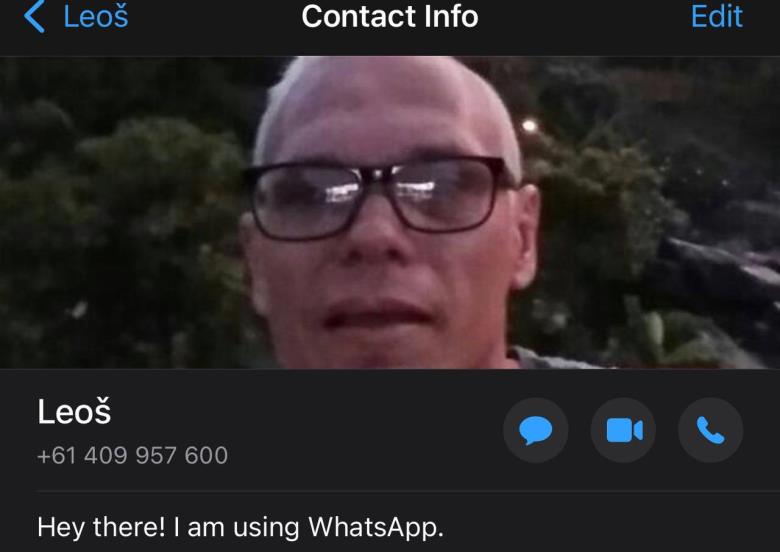
Contact screen for Leoš
Contact entry for Leoš Kratochvil included in the document.

I got them from Mayi Nalubega, who was afraid for her life; I convinced her that the only way to stop fearing was to face him. His Facebook account is https://www.facebook.com/leos.kratochvil. Mayi Nalubega is also operating an online pornography studio. CI Officer Isa Waiswa knew about it and did nothing until CID Officer Jackson Lutwama, from Kireka Police Station, arrested her. At that point Isa Waiswa told me he supported her arrest, although until then he had been supporting and protecting her as well. The document also includes CI Officer Isa Waiswa’s photo and his phone number.

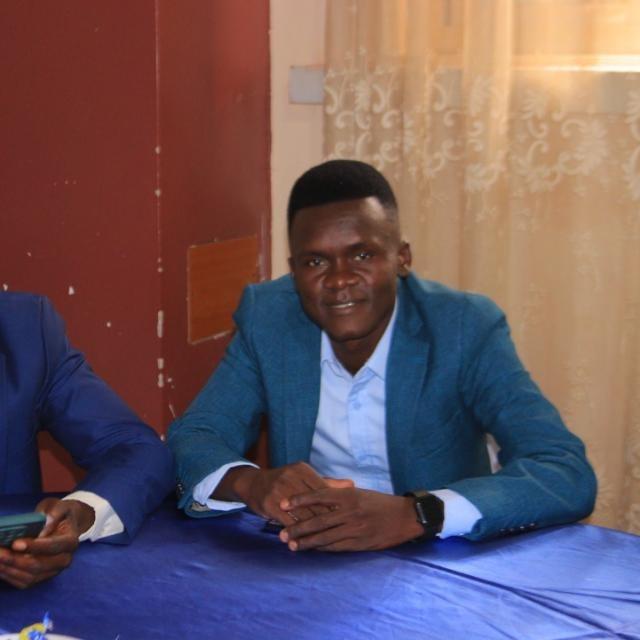
Photograph of CI Officer Isa Waiswa seated at a table
Photograph of CI Officer Isa Waiswa included in the document.
Phone contact screen for Isa Waiswa
Phone contact for CI Officer Isa Waiswa included in the document.

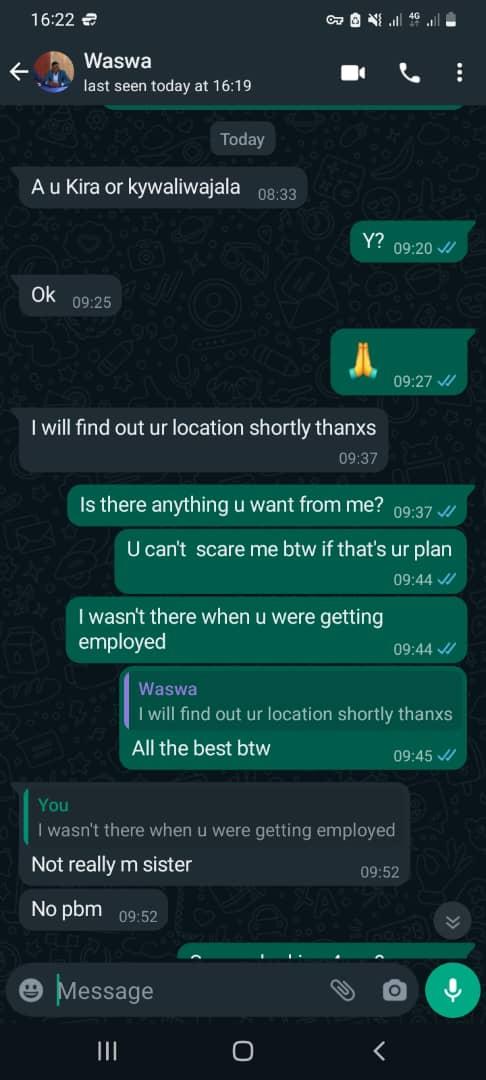
After I told Isa Waiswa that I would report him for his corruption, he tried to intimidate my then girlfriend, Hannissy Samanya, who was more than seven months pregnant, acting like a common criminal. This is abuse of power against a defenceless pregnant young woman. The document includes what that CI officer wrote to her.

Photograph of Hannissy Samanya
Photograph of Hannissy Samanya included in the document.
WhatsApp messages from Waswa
Message the document shows CI Officer Isa Waiswa sent to Hannissy Samanya.

This document has been sent to a large number of Ugandan newspapers and TV stations, as well as international ones.

Twitter messages screen for AIGP Damulira
Twitter message screen for AIGP Damulira (@Markdser).
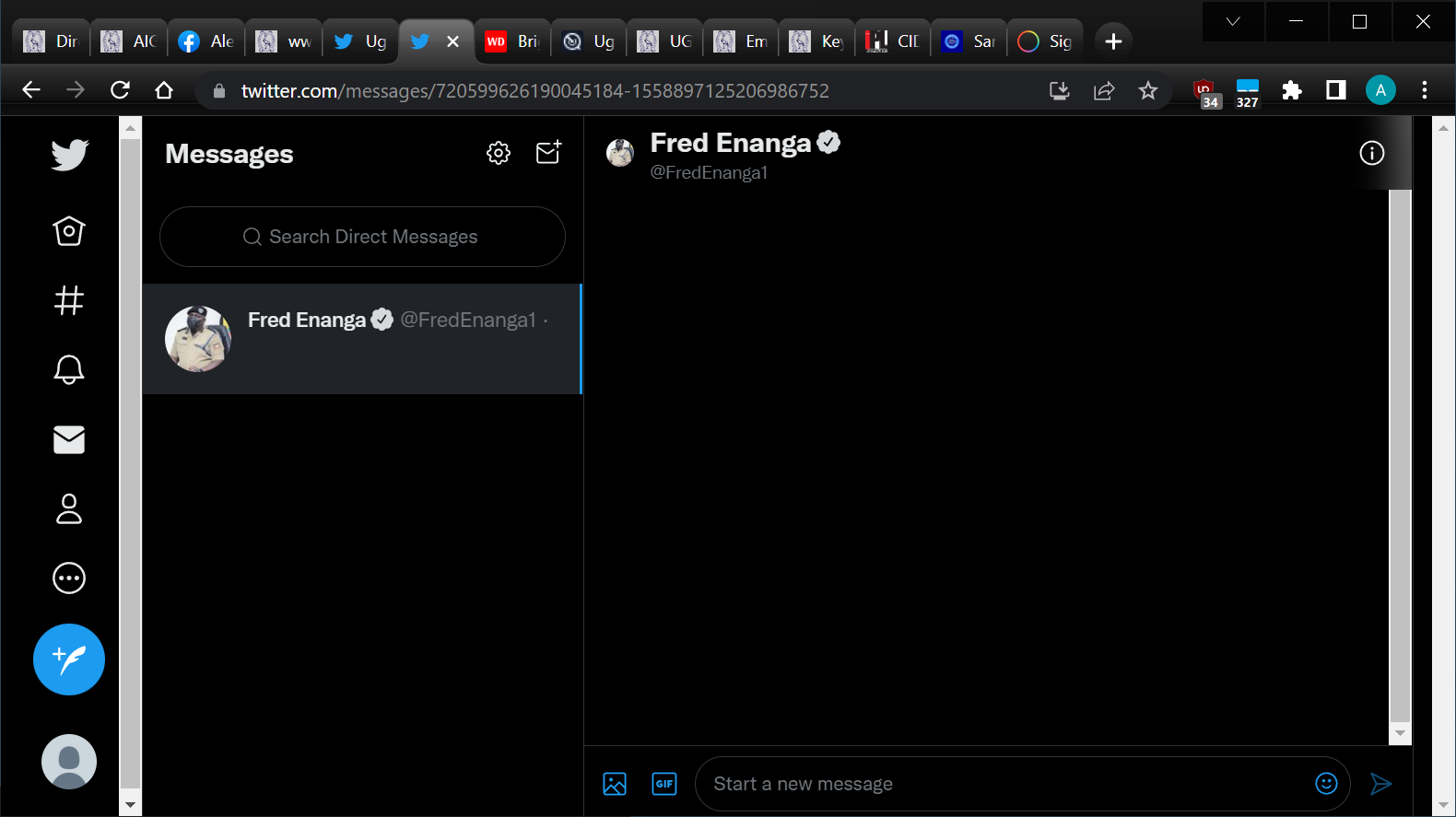
Twitter messages screen for Fred Enanga
Twitter message screen for Fred Enanga (@FredEnanga1).
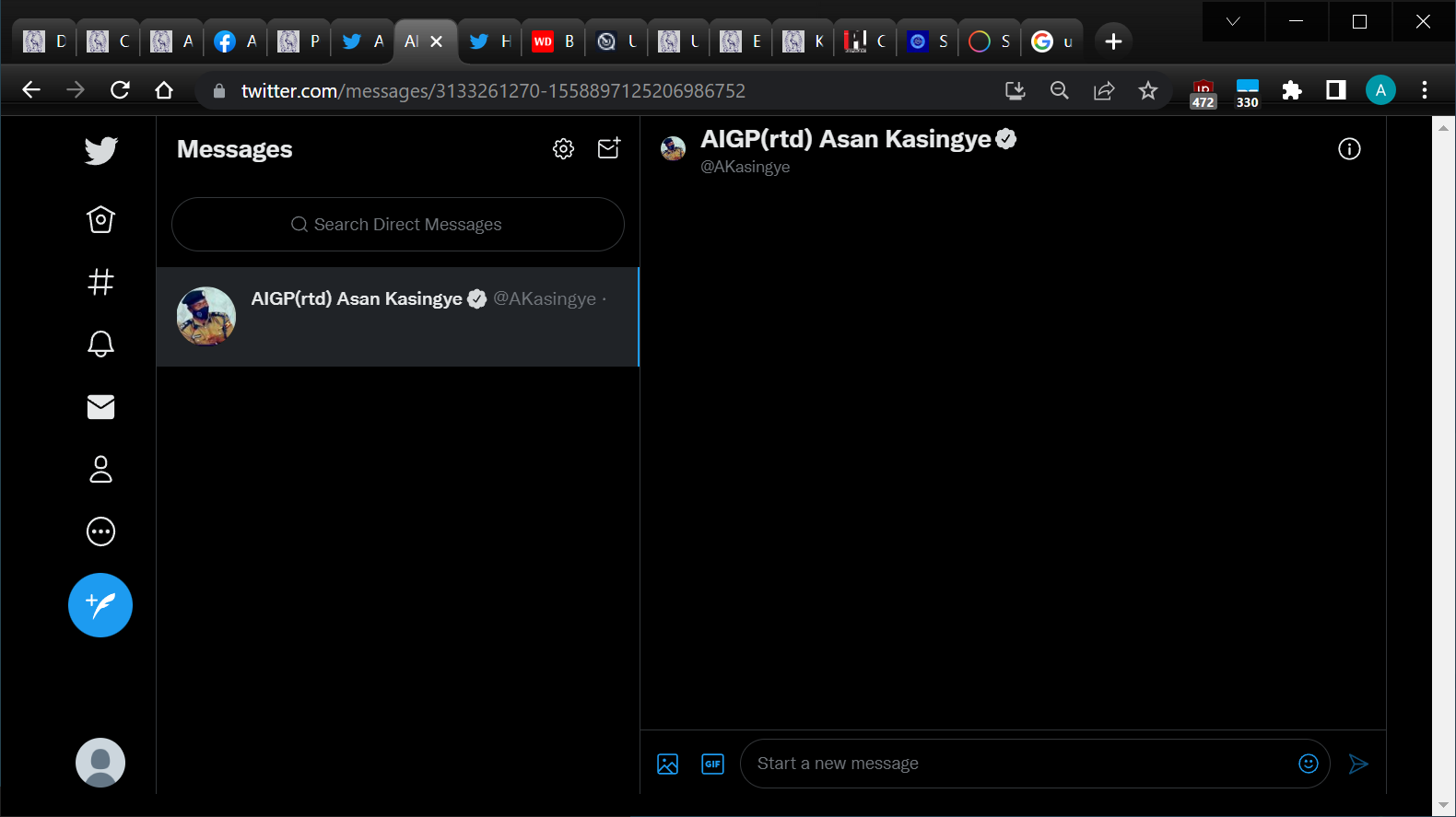
Twitter messages screen for Asan Kasingye
Twitter message screen for AIGP (rtd) Asan Kasingye (@AKasingye).
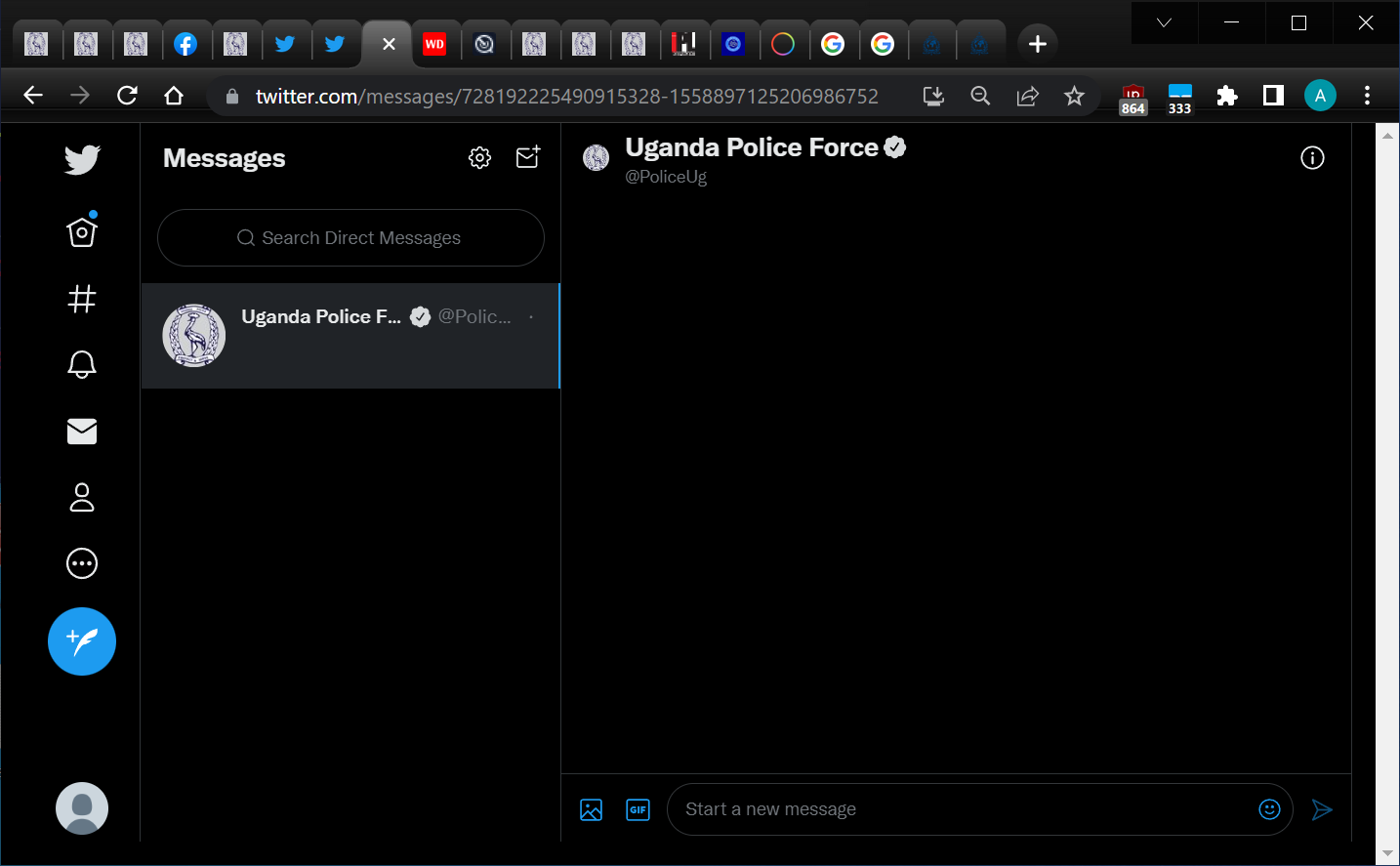
Twitter messages screen for Uganda Police Force
Twitter message screen for the Uganda Police Force (@PoliceUg).
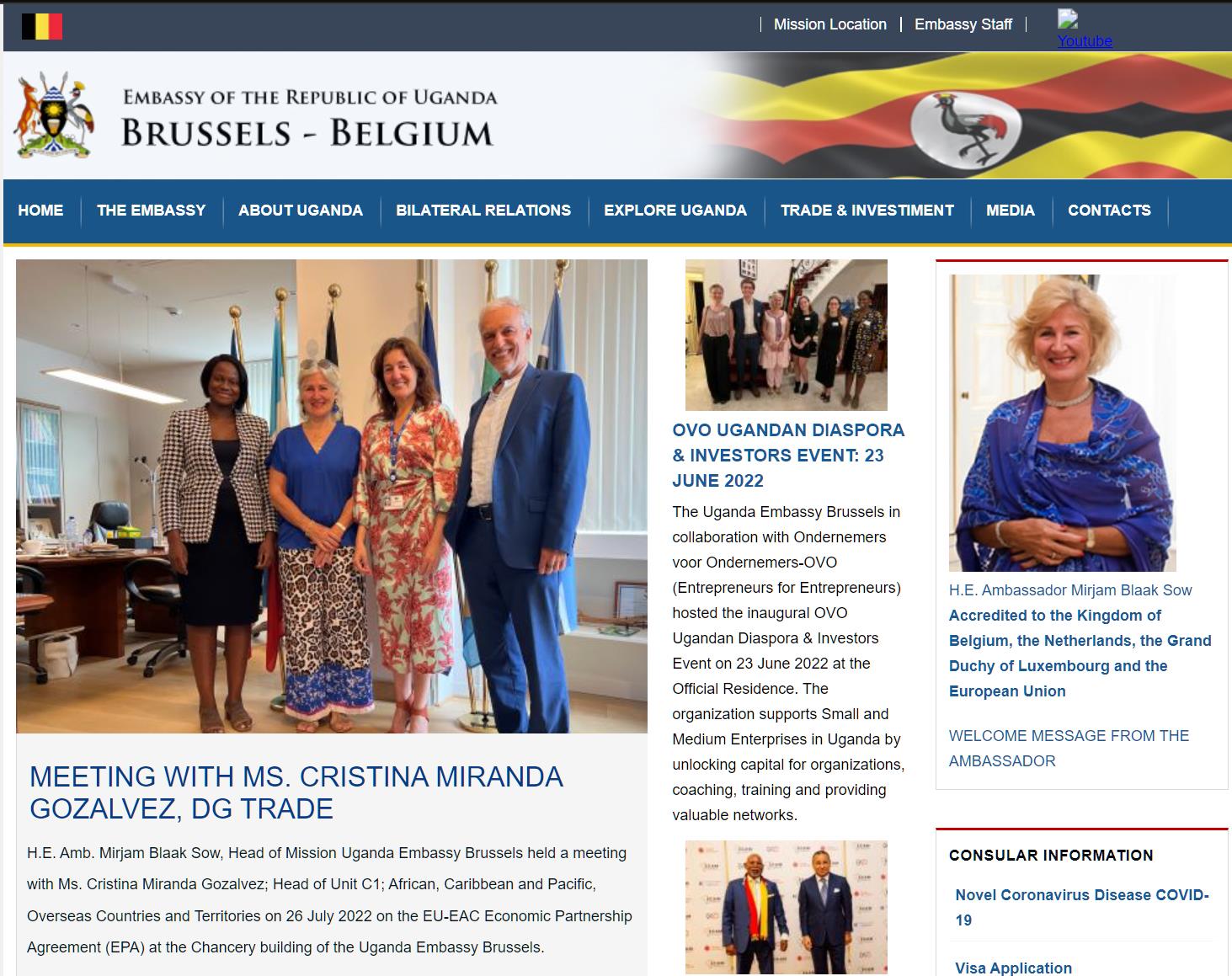
Uganda Embassy Brussels website
Uganda Embassy in Brussels, shown among the places the document was sent.
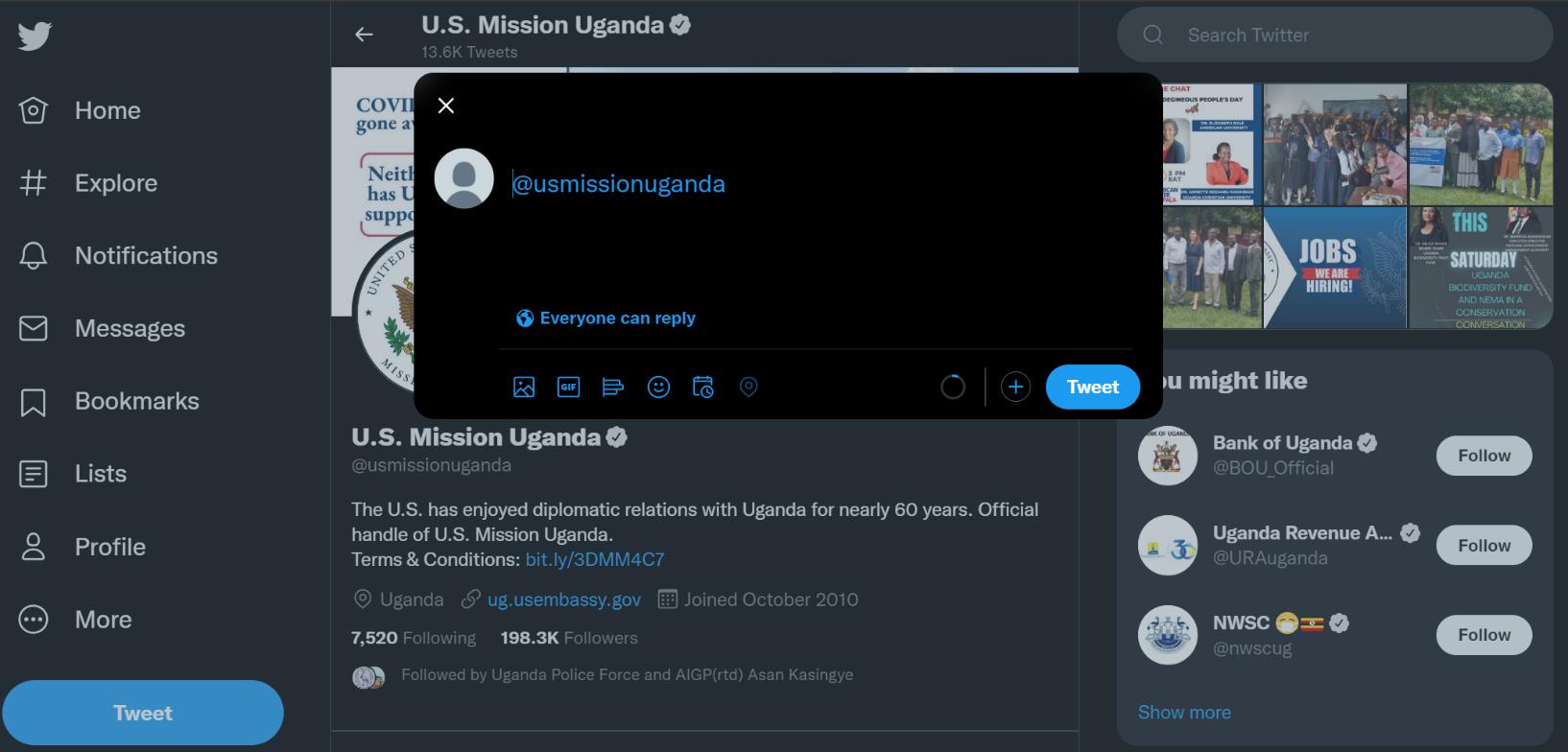
U.S. Mission Uganda Twitter profile
U.S. Mission Uganda (@usmissionuganda), shown among the places the document was sent.
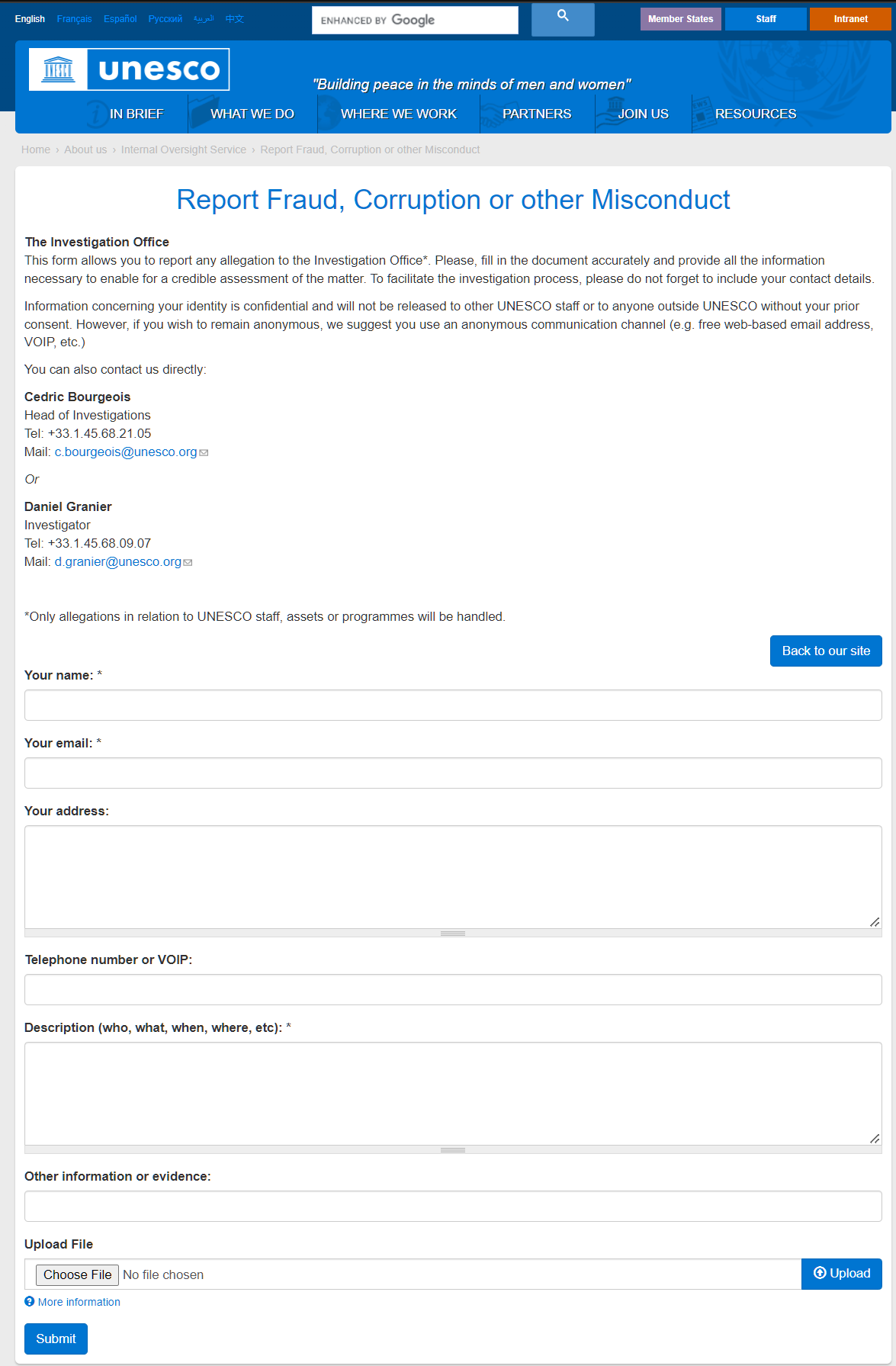
UNESCO form to report fraud, corruption or other misconduct
UNESCO page for reporting fraud, corruption or other misconduct.
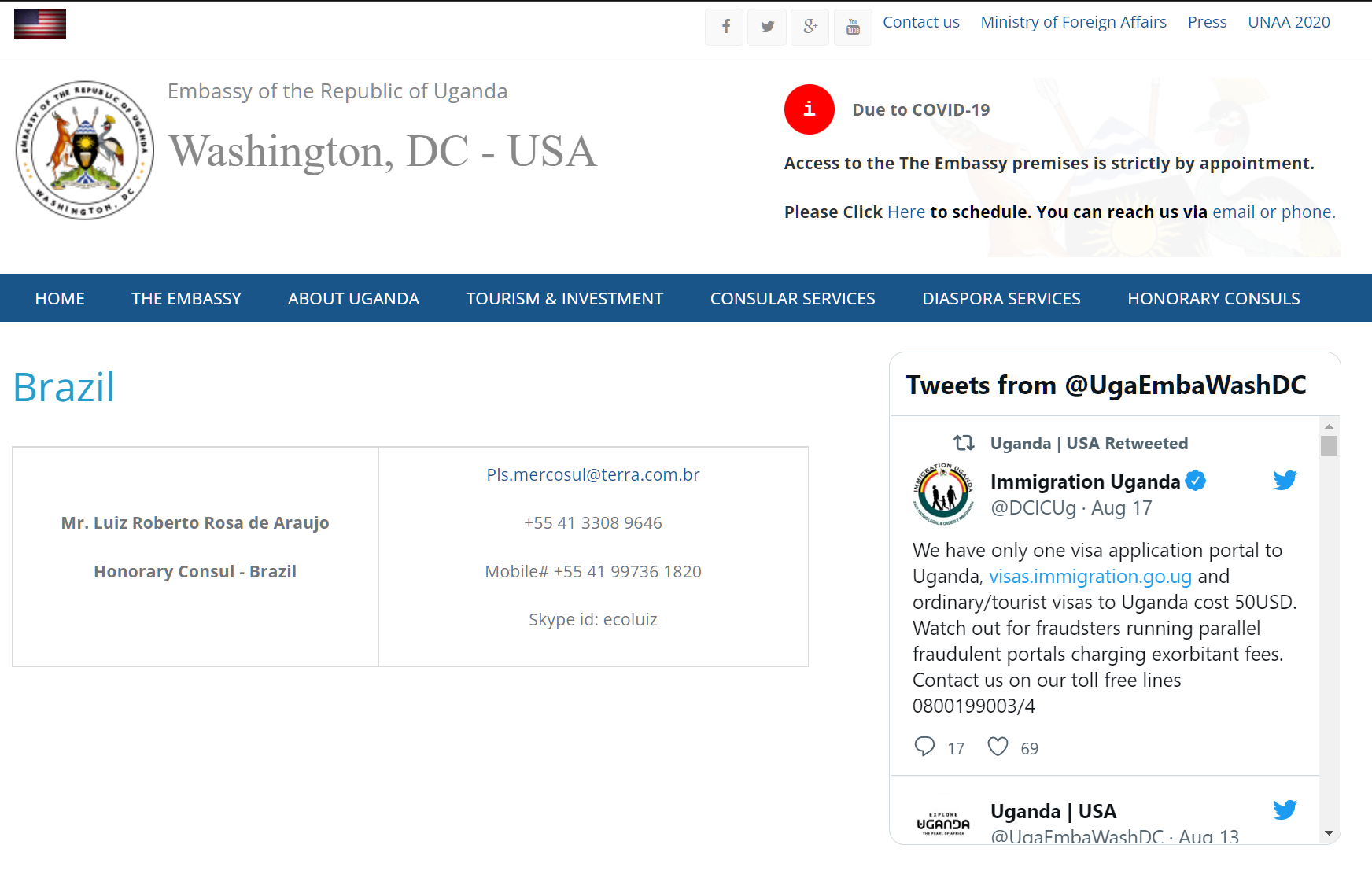
Embassy of Uganda in Washington, DC
Embassy of Uganda in Washington, DC, including the honorary consul listing for Brazil.
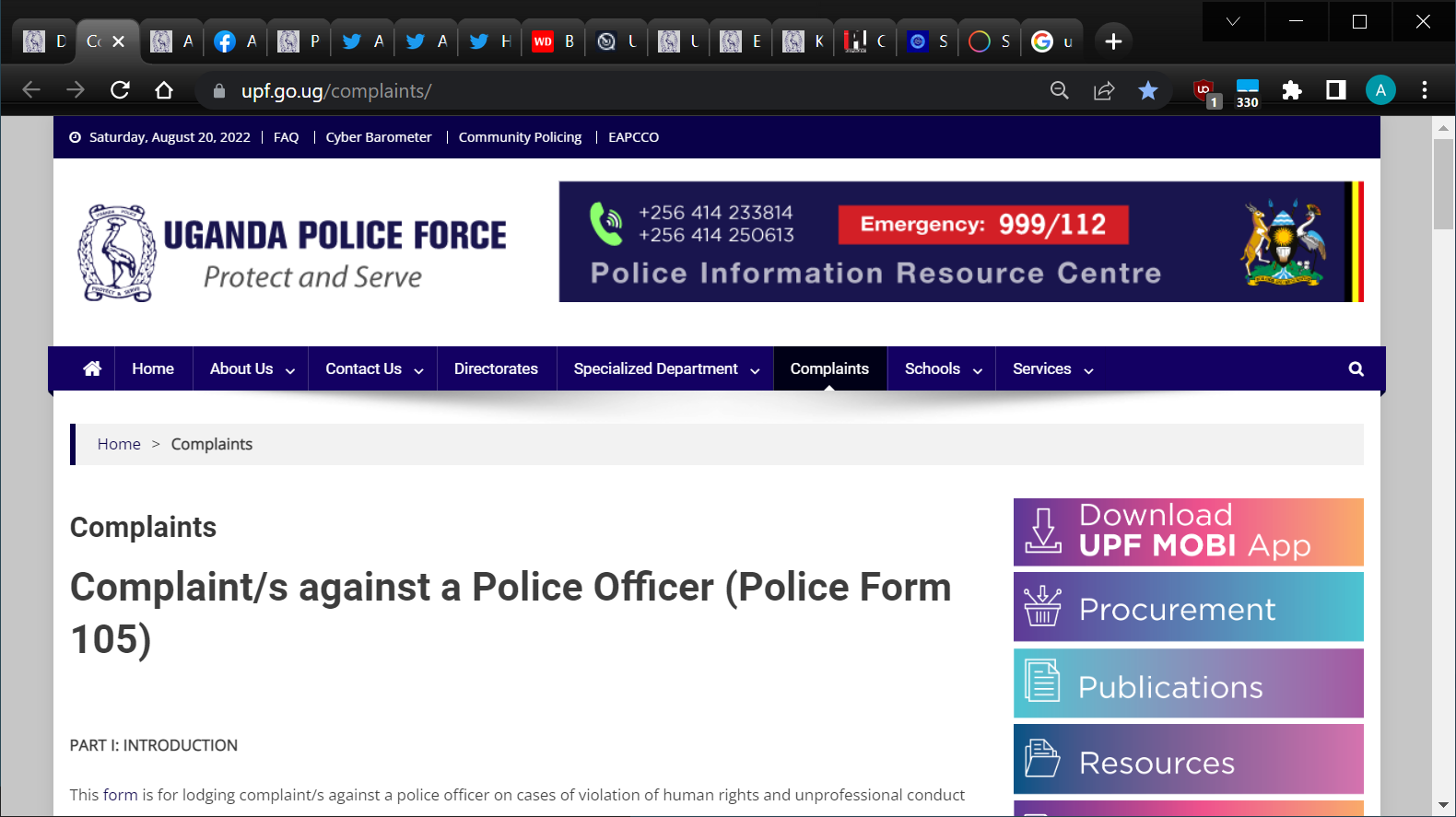
Uganda Police Force complaints page
Uganda Police Force complaints page, Police Form 105.
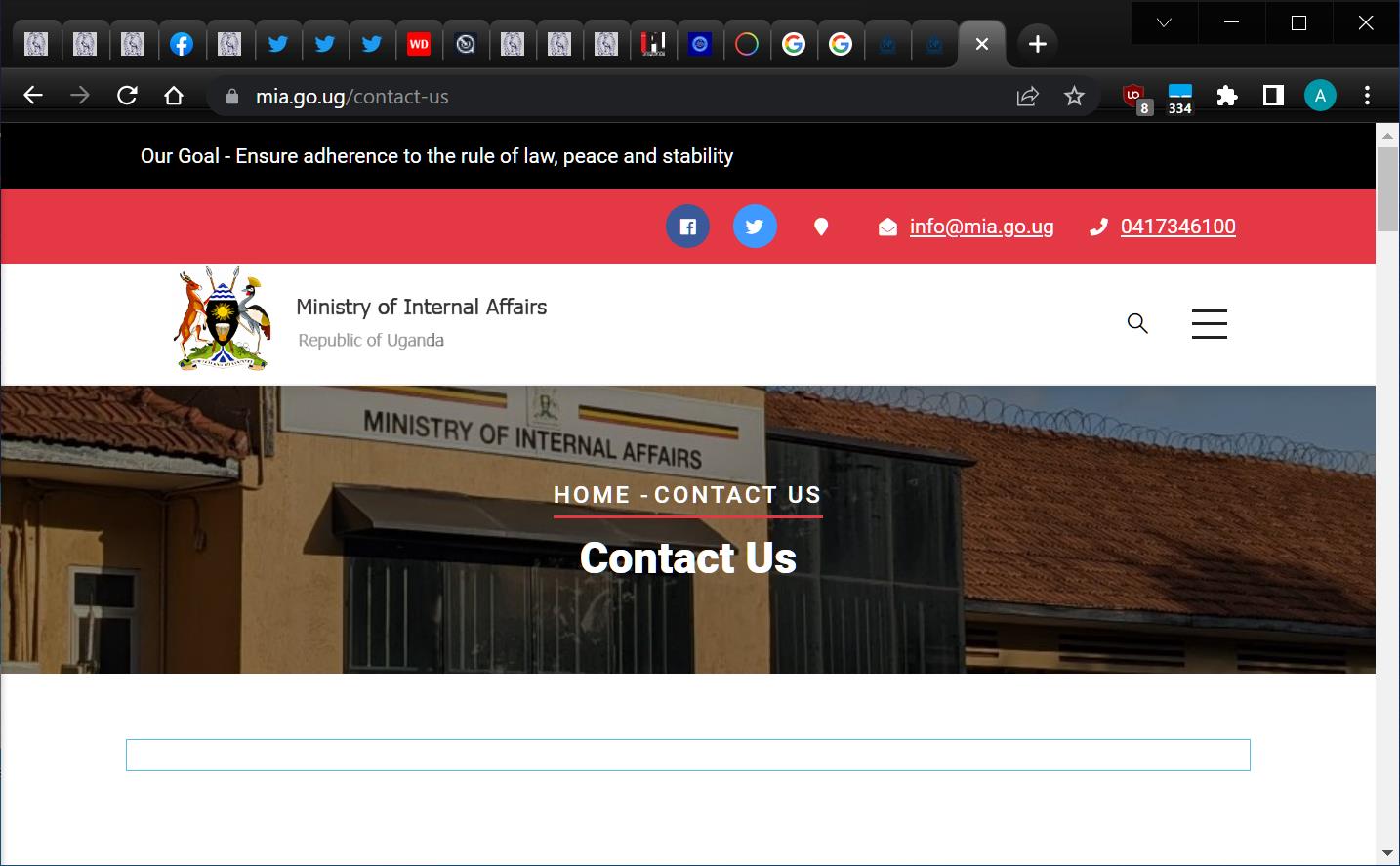
Ministry of Internal Affairs contact page
Ministry of Internal Affairs contact page.
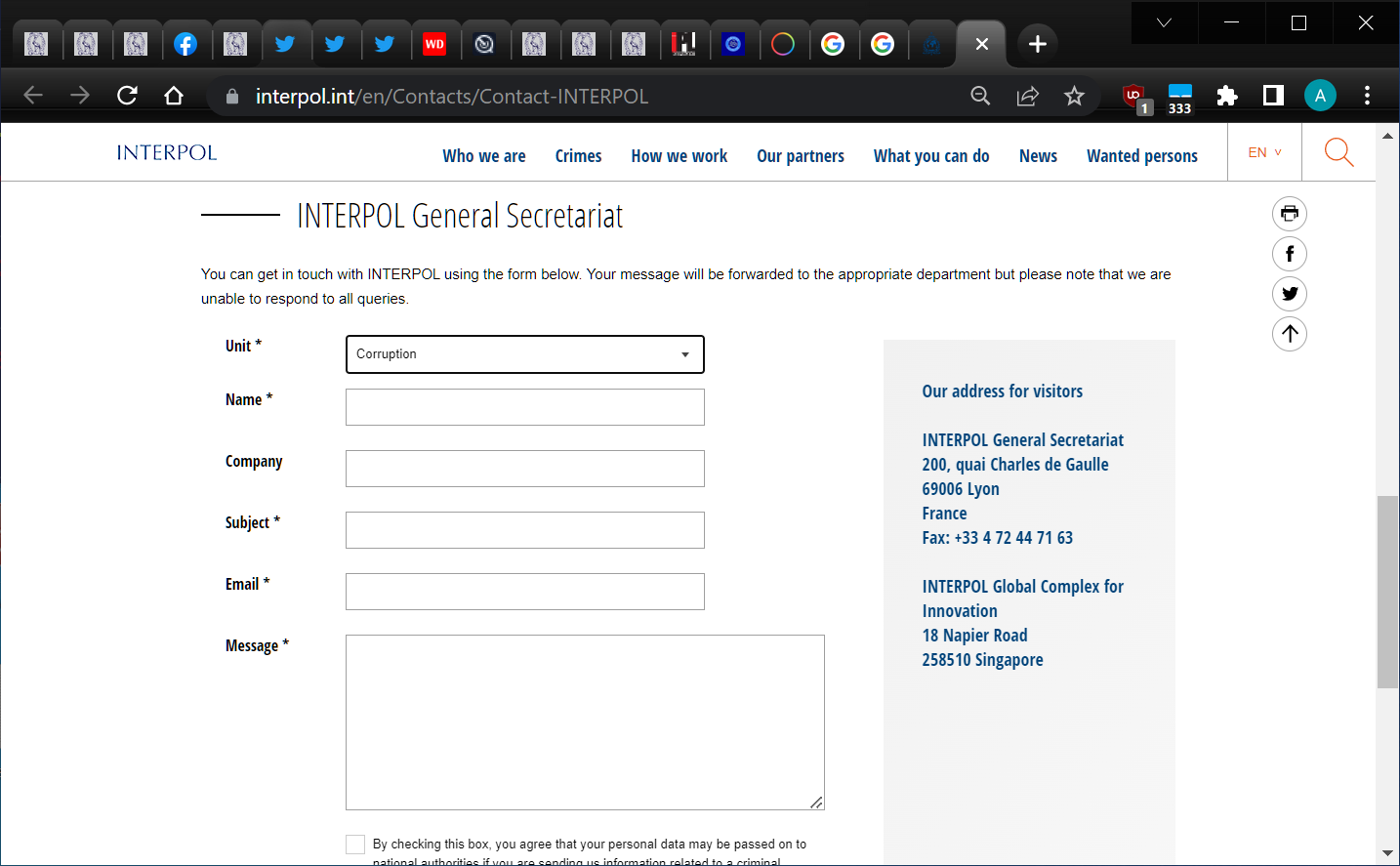
INTERPOL contact form with the unit set to Corruption
INTERPOL contact form, with the unit set to Corruption.
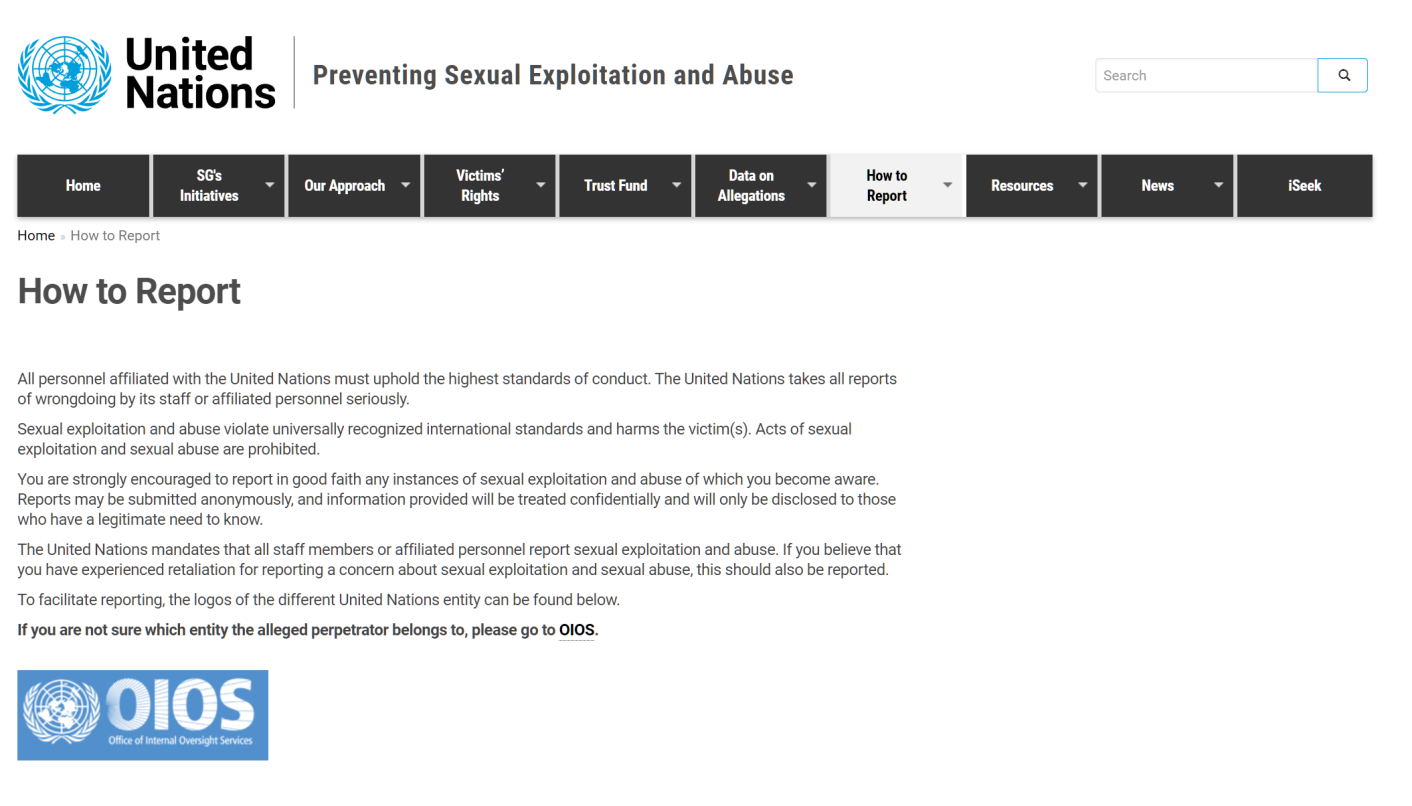
United Nations page on how to report sexual exploitation and abuse
United Nations “How to Report” page on preventing sexual exploitation and abuse.
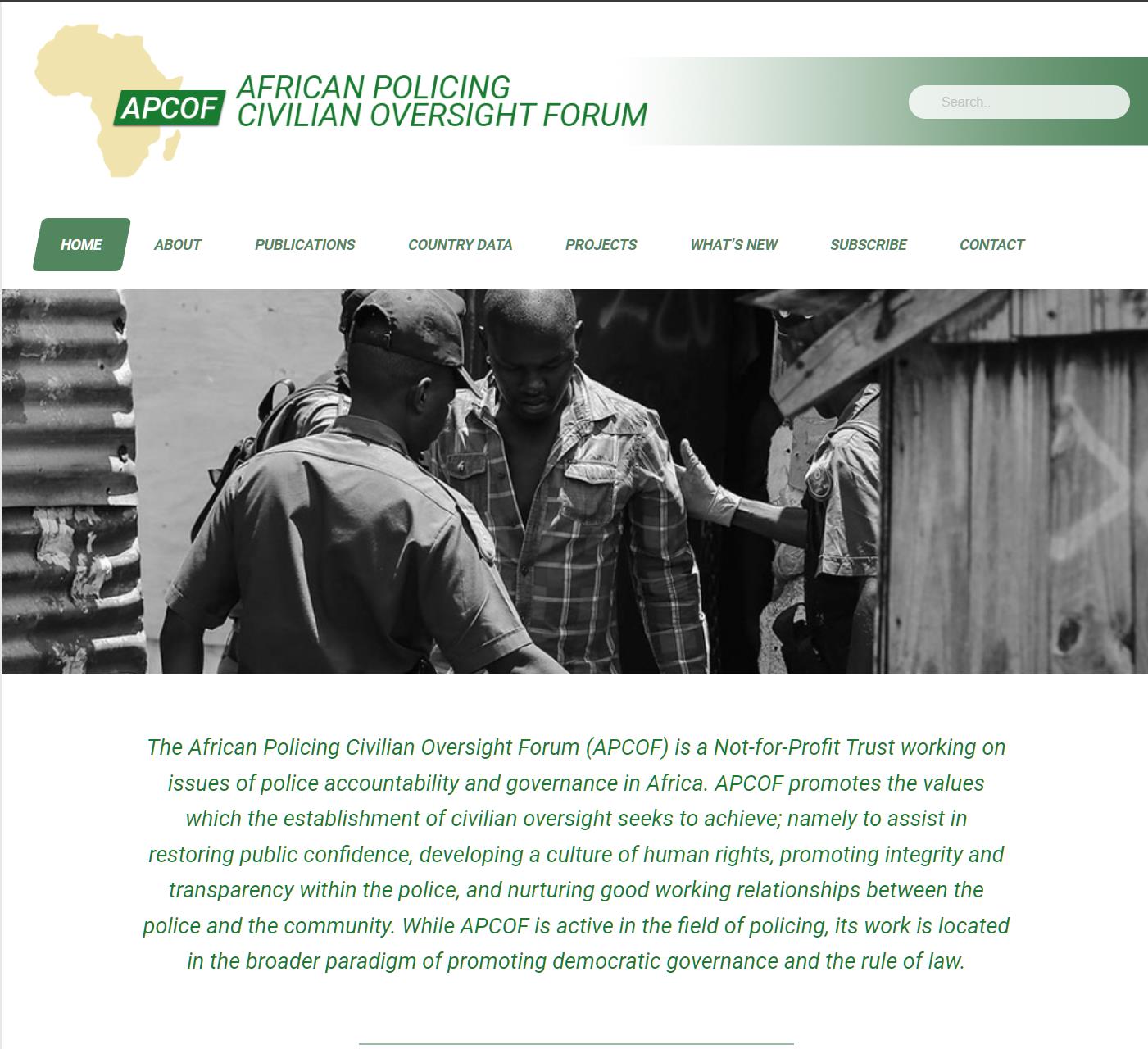
African Policing Civilian Oversight Forum home page
African Policing Civilian Oversight Forum (APCOF) home page.
KBS TV public Facebook group
KBS TV public Facebook group.
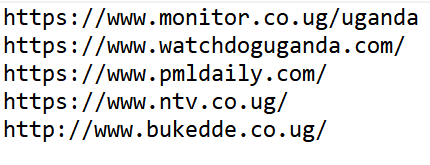
List of Ugandan news website addresses
News-site addresses listed in the document: Monitor, Watchdog Uganda, PML Daily, NTV and Bukedde.

Sincerely,
****** ***********
Senior IT Consultant
Ex European Commission
Ex-Europol IT Forensics Expert
https://www.linkedin.com/in/******

Ugandan crime, HIV infection rates and other official statistics are seriously understated

Warning to Expats & Tourists

Do not believe the low HIV infection rates officially given by the Ugandan Government/Authorities. In reality the infection rates are one in four (and in some areas worse). Use extreme caution and testing if you plan sexual encounters.

There is solid evidence from independent, non-Ugandan sources of systematic understatement, selective presentation, and data-quality problems in Uganda’s official crime, HIV-progress, and economic statistics. This contributes to a more positive international profile than everyday realities support. The issues are more about incomplete capture, underreporting driven by institutional failure, and political incentives for positive messaging than pure wholesale invention of core survey numbers.

Crime statistics: clear underreporting (“dark figure”)

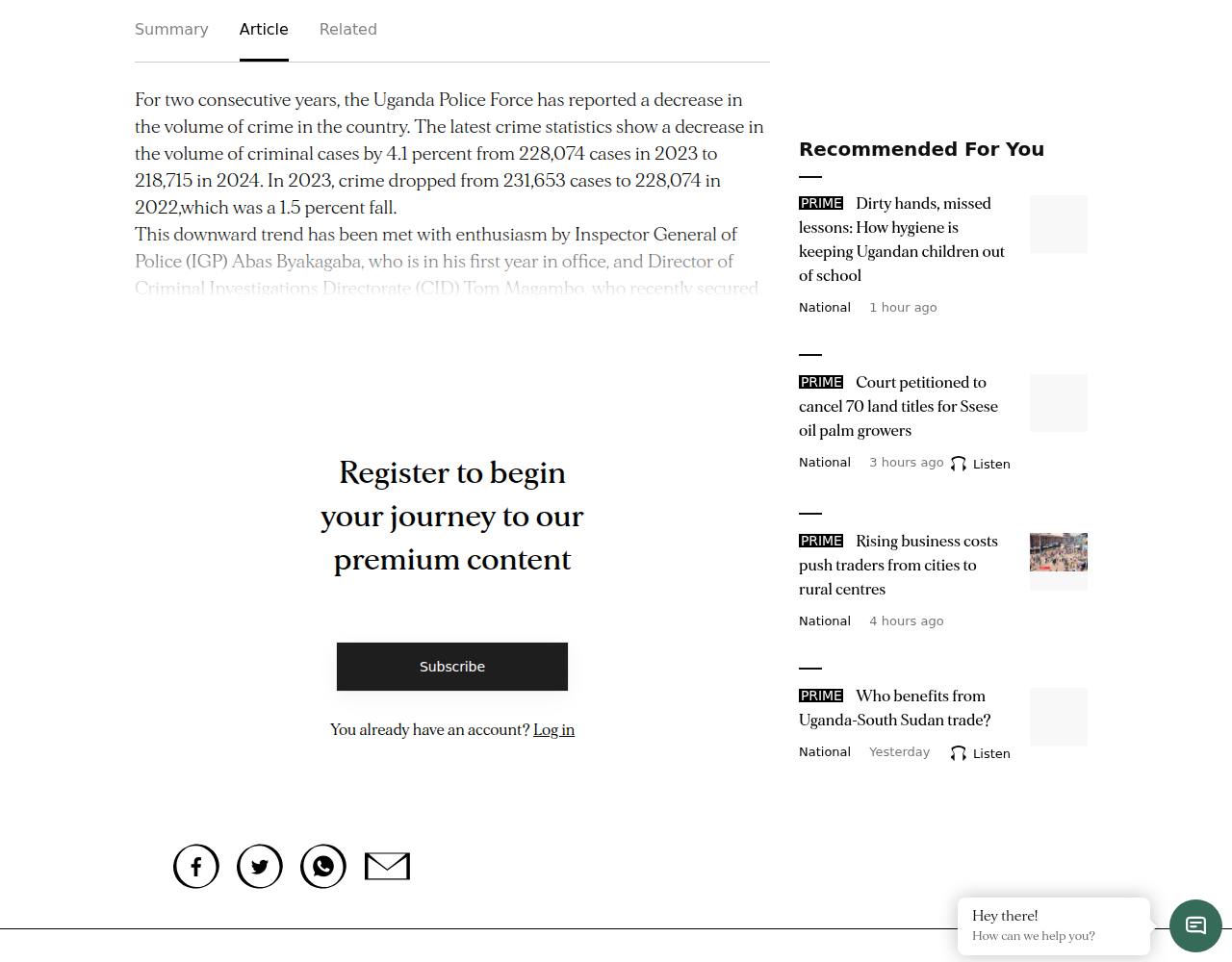
Official Uganda Police Force annual reports have recently claimed declines in reported crime (for example, about a 10% drop to about 196,000 cases in 2025). These only capture cases that reach police stations. Independent victimization surveys show far higher incidence and low reporting rates.

The Hague Institute for Innovation of Law (HiiL), with Research World International and UNODC funding, conducted a 2024 Justice Needs and Satisfaction survey of 4,892 randomly selected adults using standard crime victimization survey methods. 73% of respondents experienced at least one criminal incident in the past year (mainly burglary, crop and livestock theft, and personal theft; also assaults, fraud, and corruption). Only about 41% of incidents were reported to any authority (local councils more than police). Reasons for non-reporting included time and cost, perceived lack of seriousness, police corruption and bribery expectations (about 19%), distrust, and cultural or stigma factors (especially sexual offences). Feelings of unsafety were high: 51% sometimes felt unsafe in their area, and 21% often.

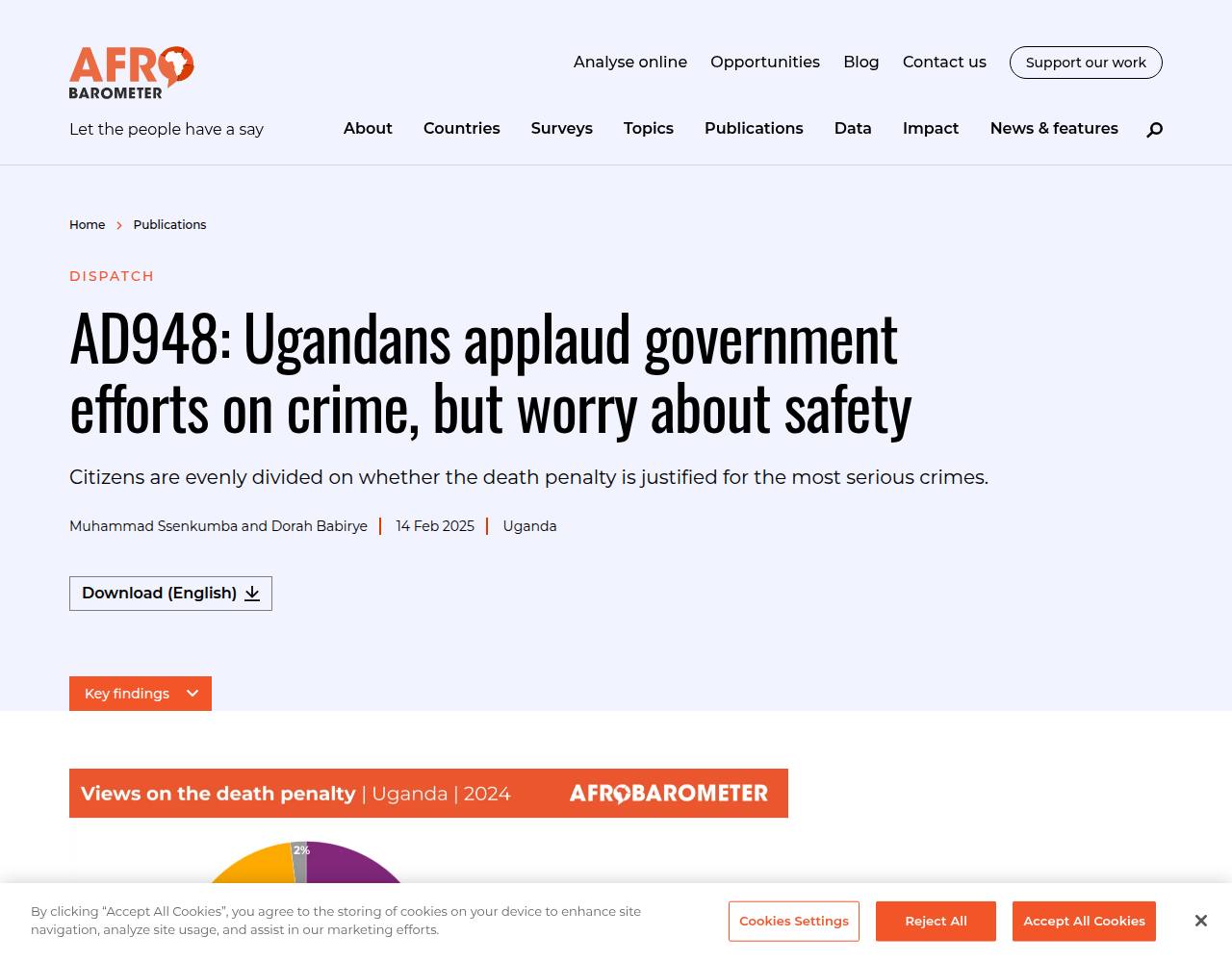
Afrobarometer, an independent pan-African survey organization, has found more than half of Ugandans reporting that they or a family member felt unsafe in their home or neighborhood at least once in the prior year, with higher rates in Kampala and some regions. Majorities also note that officials often go unpunished for crimes.

An International Justice Mission baseline assessment documented very high lifetime rates of intimate-partner and child sexual violence, with about 72% of physical or sexual violence incidents against women unreported, primarily due to low trust in the justice system, fear of retaliation, stigma, and normalization of abuse. Conviction rates from reported cases remain low amid backlogs and capacity issues.

Local Ugandan media (for example, the Monitor) have repeatedly noted that falling reported numbers can reflect public disillusionment with police rather than actual declines — distrust rooted in corruption, bribes, and low follow-through. Transparency International’s Corruption Perceptions Index consistently rates Uganda poorly (a score around 25/100, ranking about 148th out of about 180–182 countries in recent years), stagnant or declining. This erodes willingness to report and undermines the reliability of administrative crime data.

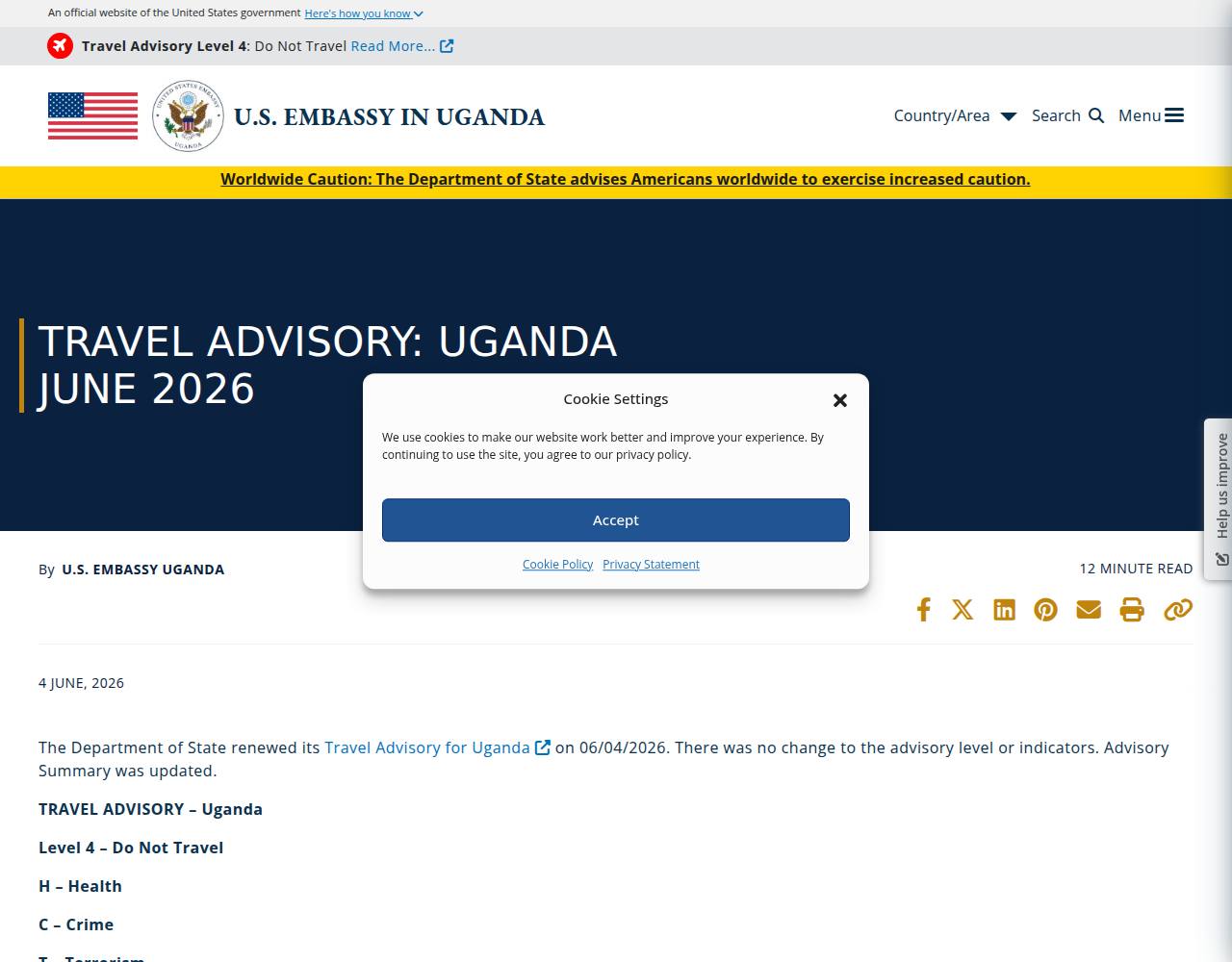
Western government travel advisories (US State Department Level 3 “Reconsider Travel” or temporary Level 4, Australia “high degree of caution,” and others) highlight violent crime (armed robbery, home invasion, sexual assault), petty crime, and limited police capacity as real risks, especially in cities and border areas, alongside terrorism and unrest. These assessments are based on embassy reporting and open sources, not Ugandan official claims.

HIV statistics: credible core prevalence, spun progress narrative

Recent population-based surveys (Uganda Population-based HIV Impact Assessments, the UPHIA series, conducted by the Ministry of Health with CDC, ICAP/Columbia, PEPFAR, and other international partners) put adult (15+) HIV prevalence at roughly 5.5–5.9% (about 1.5 million people living with HIV). These use standardized methods and are more reliable than pure program or sentinel surveillance data. Prevalence has stabilized after earlier declines rather than continuing a sharp drop. Treatment cascade metrics (awareness, ART, viral suppression) have improved substantially, but gaps remain, especially in diagnosis and among younger people and key populations.

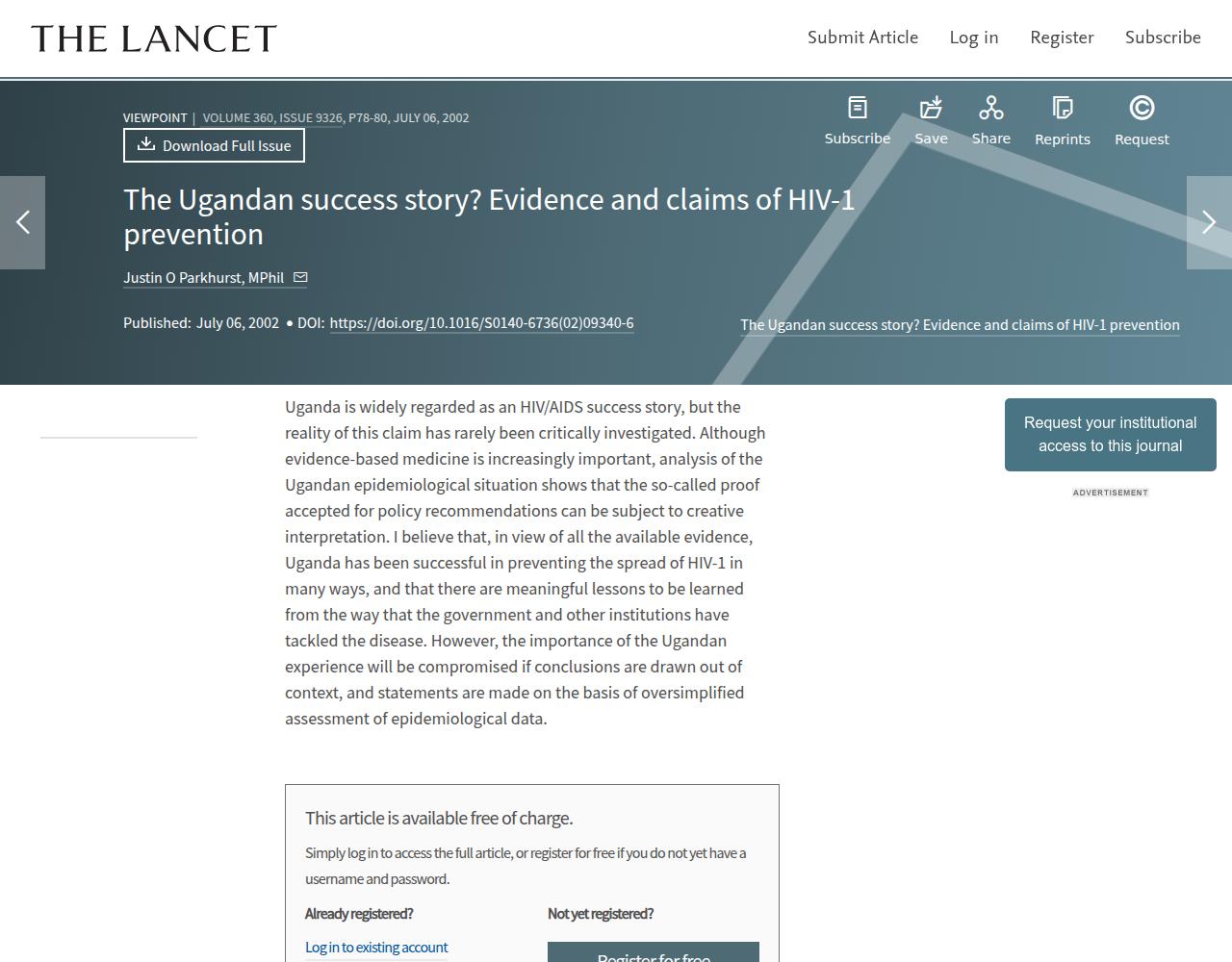
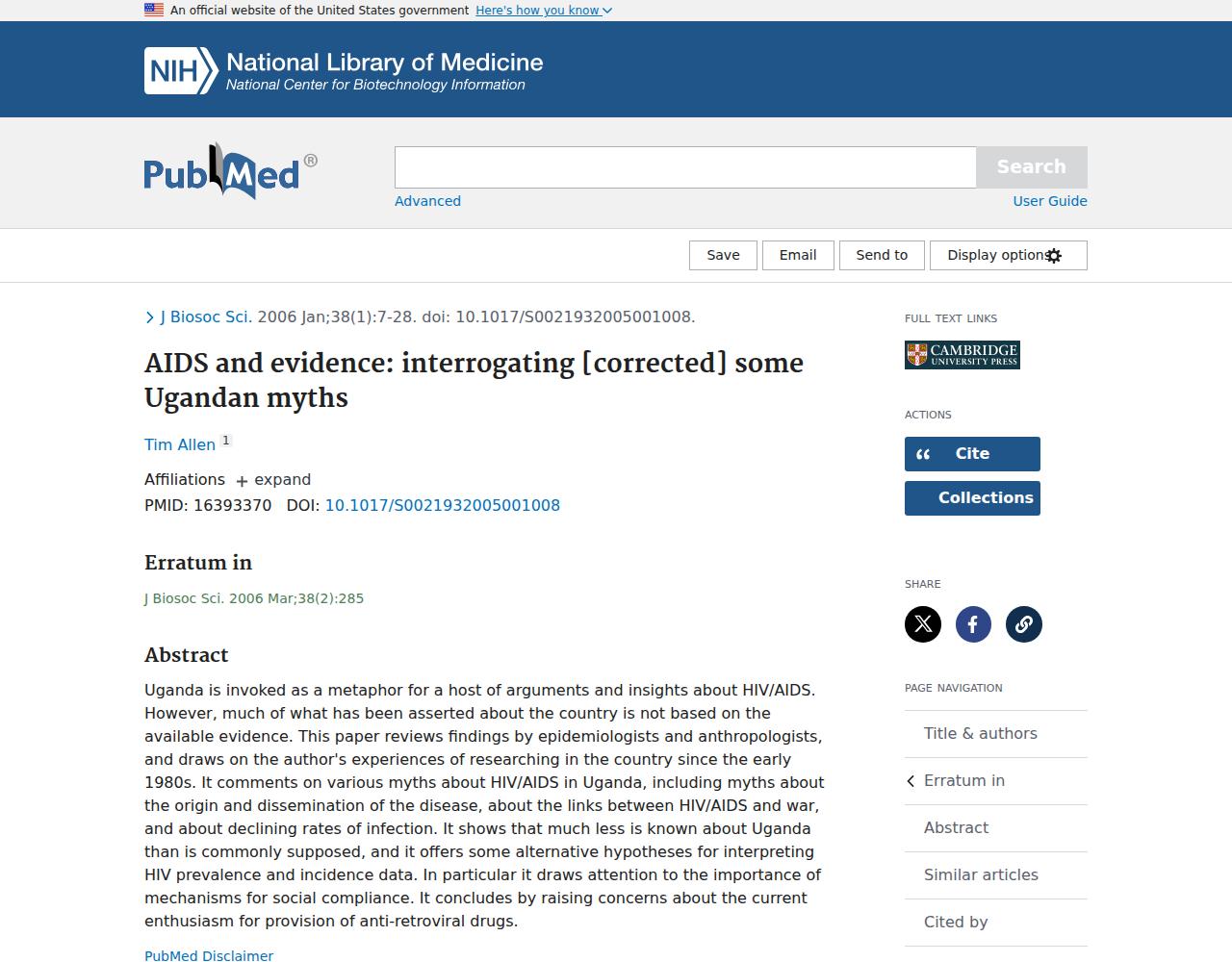
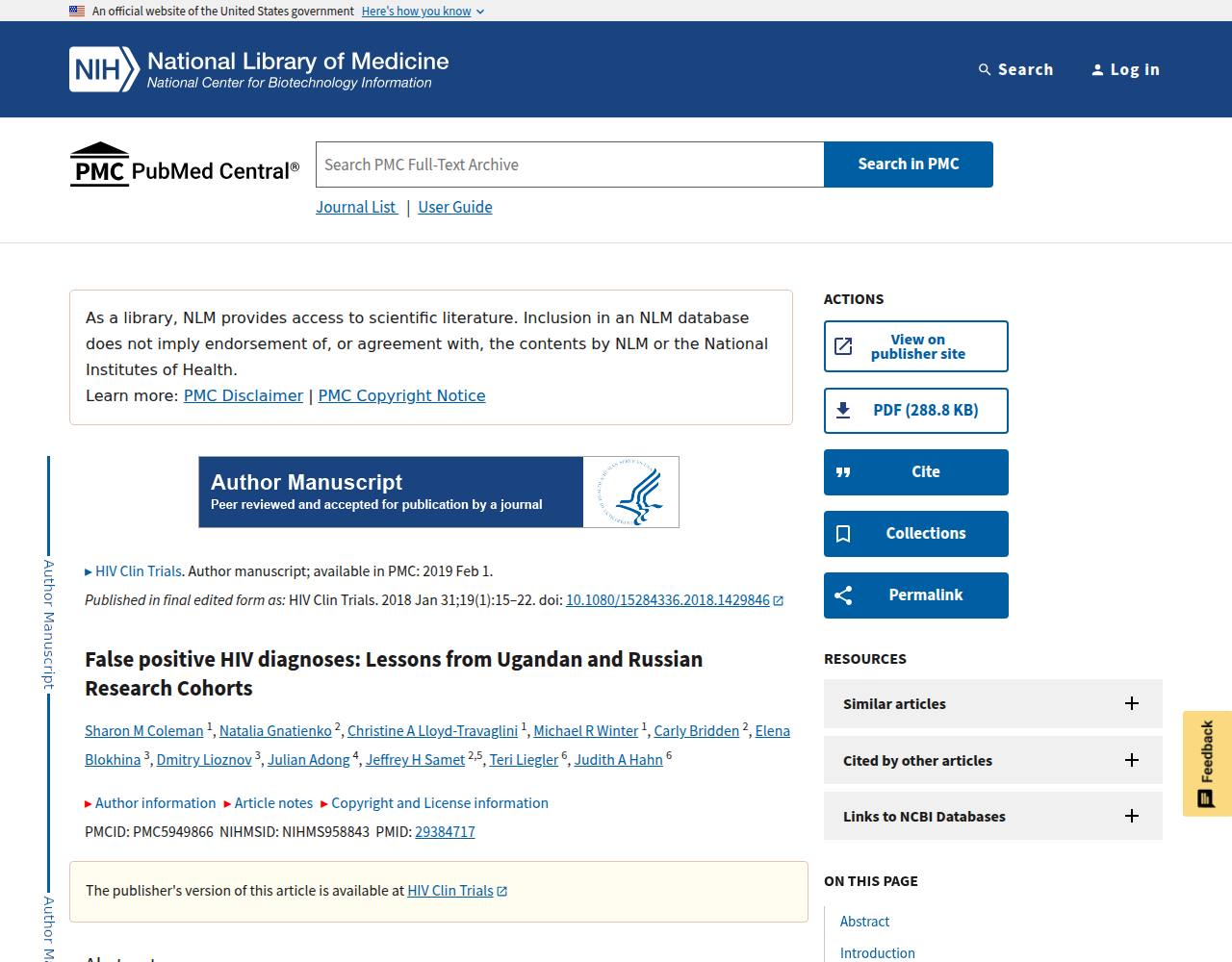
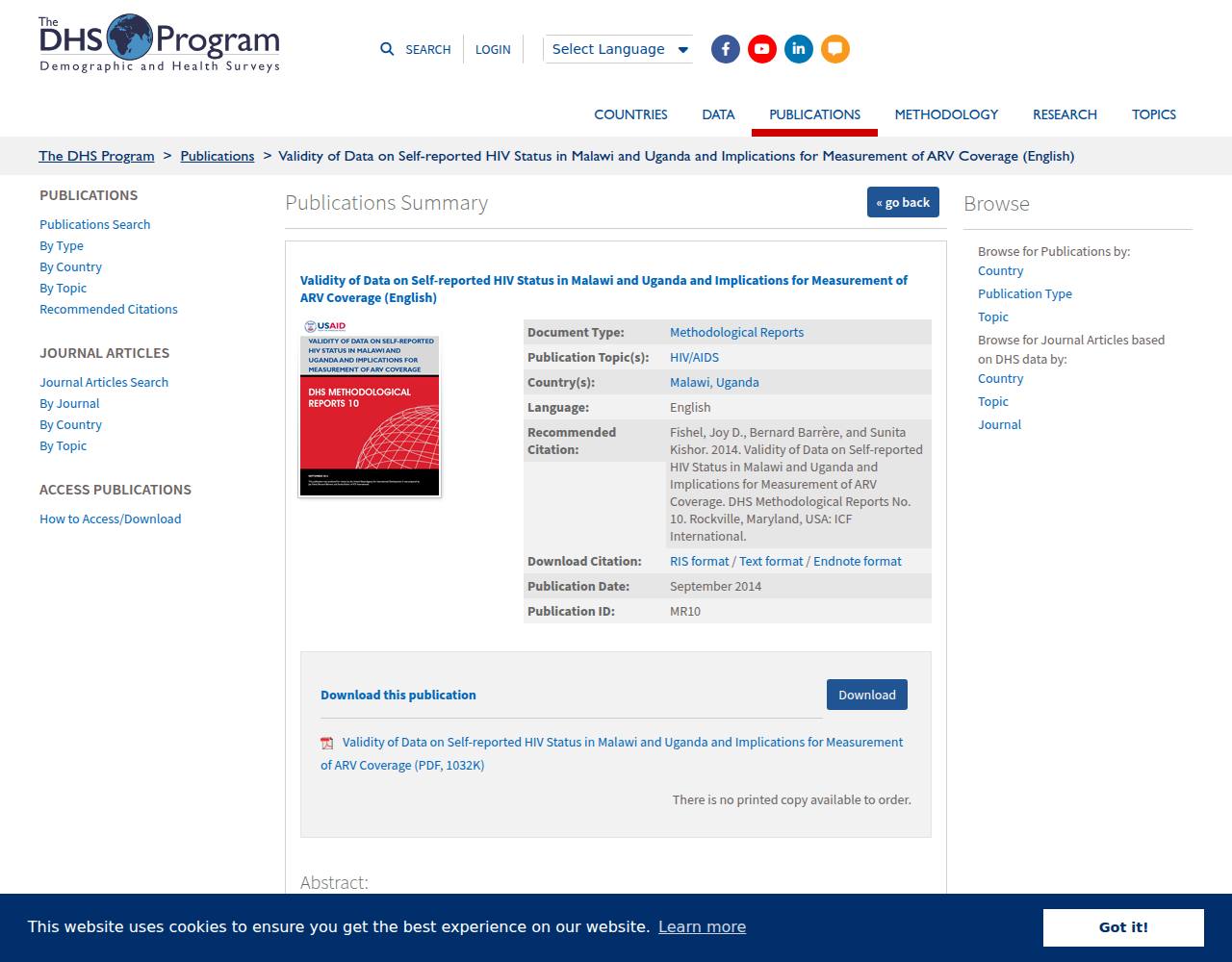
There are documented problems with messaging, program data, and the historical narrative. Academic critiques (Justin Parkhurst in The Lancet, 2002; Tim Allen in the Journal of Biosocial Science, 2006) argued that Uganda’s celebrated “success story” involved selective interpretation of data, oversimplification, and political framing rather than unambiguous evidence of uniquely strong prevention effects. Declines were real in places but generalized too broadly. Methodological issues include false-positive or misclassified results from rapid diagnostic tests in some cohorts, substantial underreporting of known positive status by individuals in surveys (DHS methodological reports), and underreporting of opportunistic infections and events in routine clinic databases compared with research cohorts. Government claims of very large reductions in AIDS deaths or new infections have been challenged against UNAIDS and UPHIA benchmarks as exaggerated via baseline choices or redefinitions. There are also persistent data gaps for key populations (partly linked to criminalization) and dependence on external donors for the bulk of the response, which official “self-reliance” rhetoric downplays.

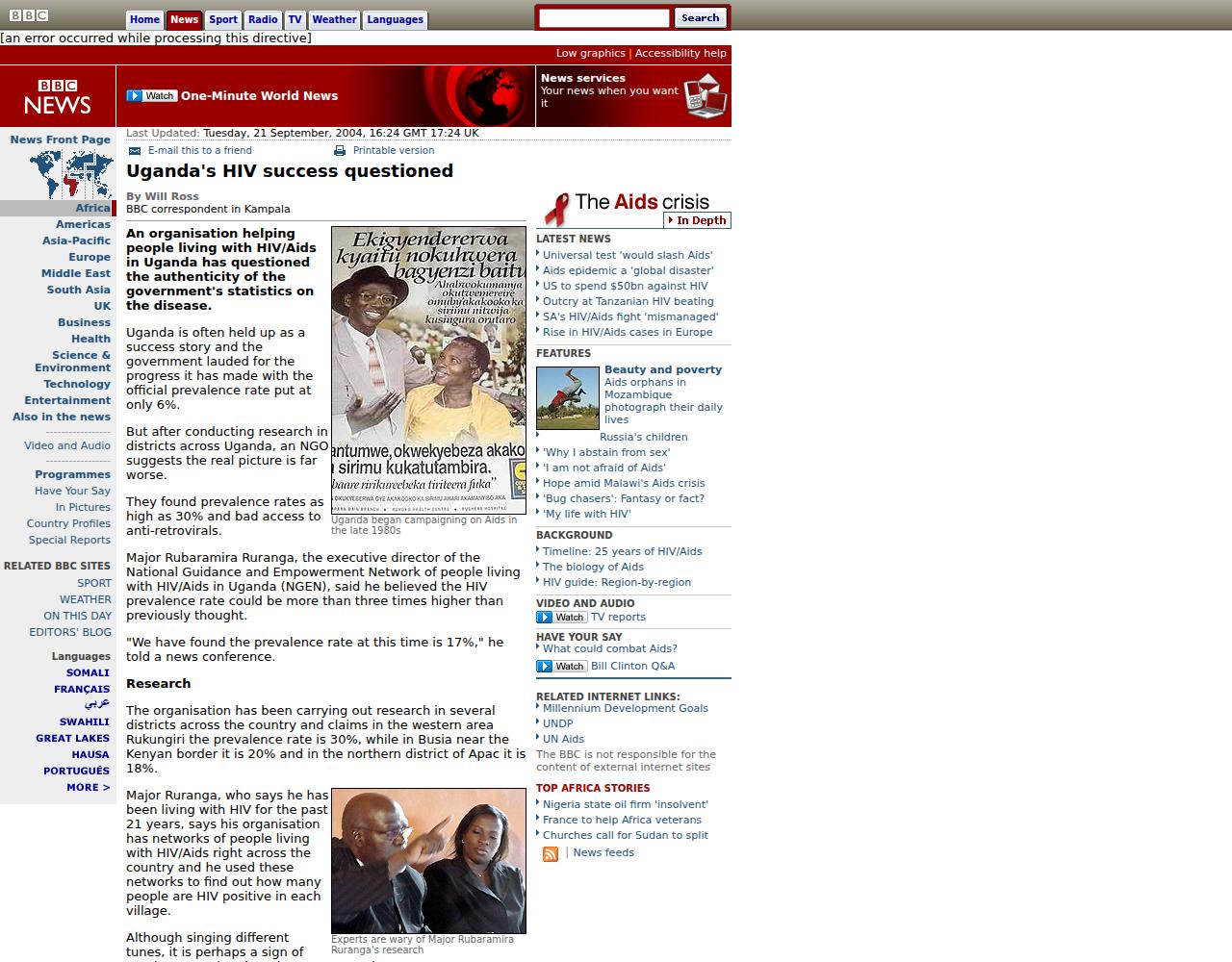
Older local NGO claims of much higher prevalence (for example, about 17% national or 30% in districts versus an official about 6% around 2004) were dismissed by health authorities as less rigorous than population surveys. Those surveys have remained the gold standard.

Other key statistics and image management

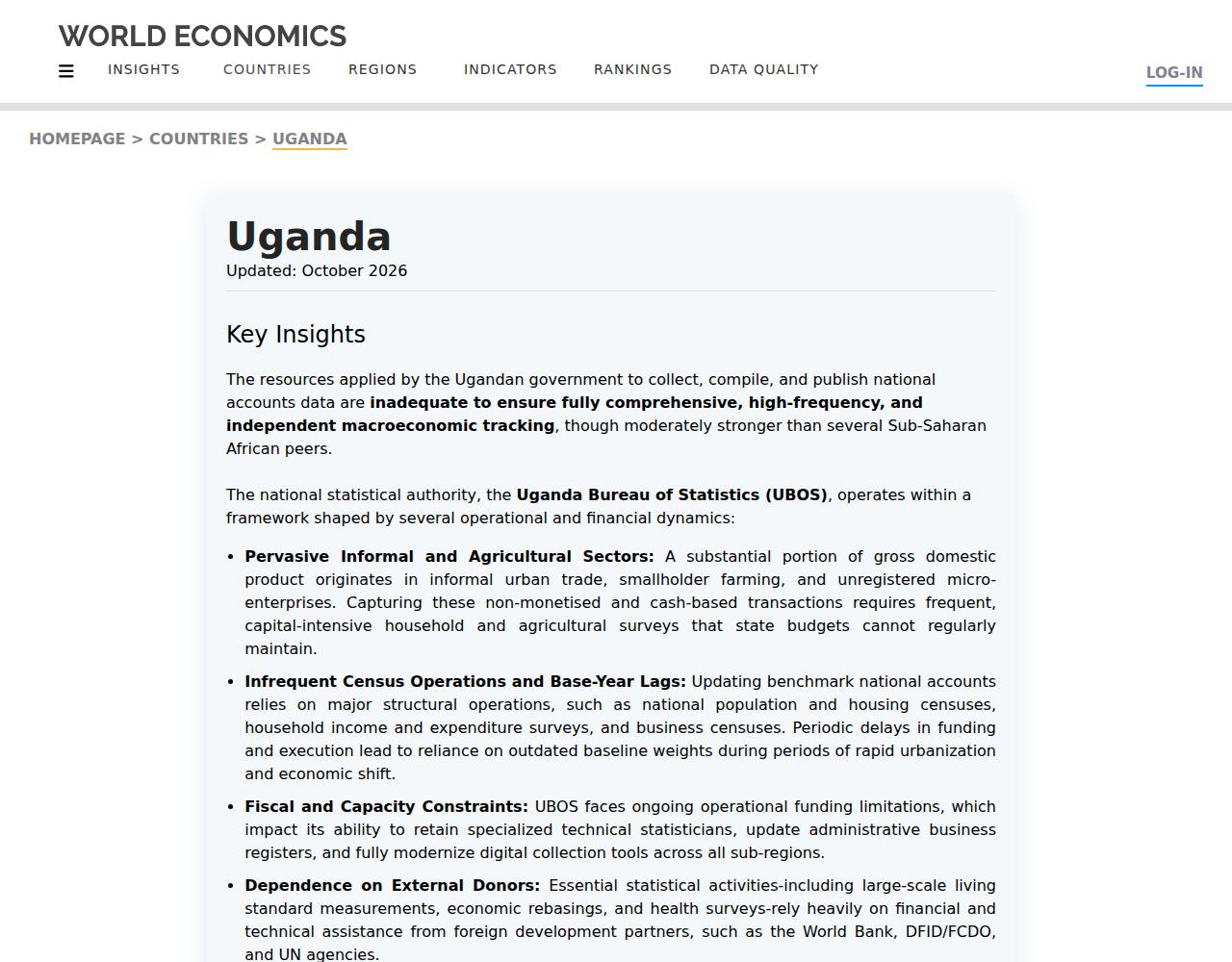
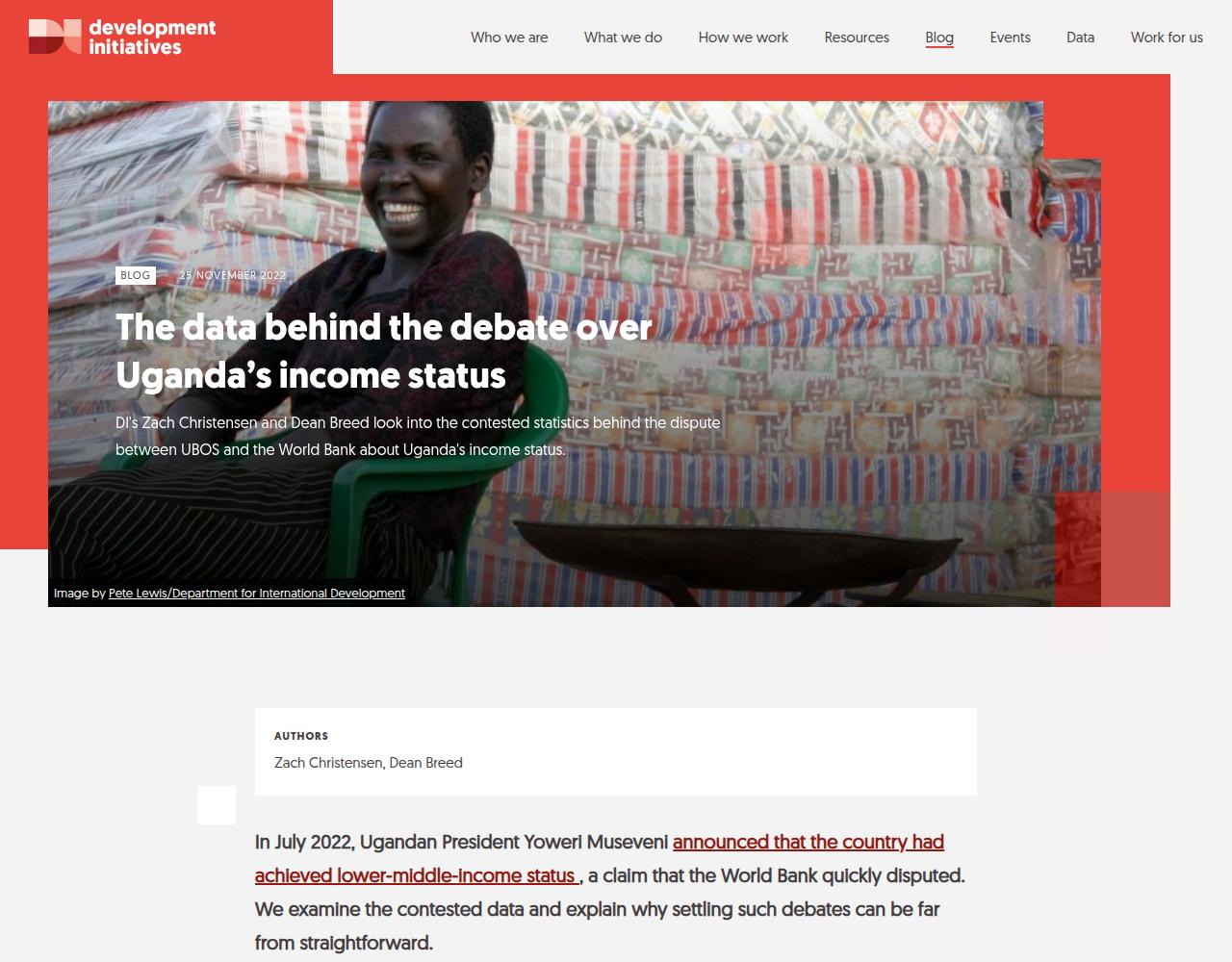
Economic and income classification. The government has repeatedly claimed lower-middle-income status based on its GDP per capita figures and population estimates. The World Bank (using GNI per capita via the Atlas method and higher population figures) has kept Uganda classified as low-income. Differences arise from GDP versus GNI, time periods, and population denominators (UN estimates have been higher than official projections in the past). IMF data-quality assessments have historically flagged coverage gaps (especially agriculture and the informal sector), limited scope in some series, and resource constraints. World Economics rates Uganda’s macroeconomic data quality as “poor” (Grade D range in recent assessments), citing informal economy size, outdated base years, capacity limits, and risks of interference, and explicitly warning that the data should not be used for serious decision-making.

Census and administrative data. The 2024 census provisional report contained swapped ethnic population figures for several groups (later called human error by UBOS and corrected), which fueled public skepticism about manipulation. Customs and trade data quality assessments have found inflated export values and completeness problems in some regimes.

Broader statistical capacity. Uganda scores moderately on open-data and statistical performance indicators. Good population-based surveys often rely heavily on donor funding and technical support. Administrative data from ministries and police have well-known quality and completeness problems.

Tourism and investment promotion emphasize safety, natural attractions (gorillas, parks), and progress. Ugandan officials and MPs have publicly complained that “negative publicity” around disease outbreaks, insecurity, or other events harms arrivals and revenue. This is standard image management, but it sits alongside independent evidence of high everyday victimization rates, a persistent HIV burden, high corruption, and elevated travel risks.

Bottom line

Official crime numbers substantially understate the problem because most incidents are never reported, due to distrust, corruption, capacity limits, and cultural factors — documented by independent victimization surveys. HIV prevalence from recent population surveys is reasonably credible and shows an ongoing significant epidemic, but progress metrics and the historical “success story” have been selectively framed. Economic and other headline figures face data-quality problems, methodological disputes with international institutions, and incentives to present positive results. High corruption (per Transparency International) and weak institutions make systematic positive spin more likely.

These patterns are not unique to Uganda among countries with similar governance and capacity constraints, but they are real. Reliable non-Ugandan sources include HiiL and UNODC-funded surveys, Afrobarometer, Transparency International, IMF and World Bank data assessments, World Economics data-quality ratings, US and other Western travel advisories, and peer-reviewed academic critiques of the HIV narrative. For travelers or investors, the practical picture is riskier and more uneven than polished official tourism or progress claims.

Key source links

The document also cites an International Justice Mission baseline, via New Vision and related coverage, on high unreported rates of violence against women. That item is given without a URL.